
5 Best Binoculars for Low Light Conditions for Hunters
The 15×52 HD Binoculars are the best binoculars for low light conditions for most buyers because their 52mm objective lenses can gather more light than smaller models. Their 15x magnification also helps bring distant subjects closer for early-morning wildlife viewing, outdoor events, and evening observations. Keep in mind that high magnification can make hand shake more noticeable.
This guide is for shoppers who need clearer views near dawn, dusk, or under heavy cloud cover. The main factors are objective-lens size, optical coatings, overall weight, and tripod compatibility. Larger lenses may improve brightness, but they can also make a pair heavier to carry. Optical quality matters just as much as magnification, since poor glass can produce dim or fuzzy images. The five picks below are ranked with clear reasons and honest drawbacks for each.
Quick Comparison
| # | Product | Best For | Price | |
|---|---|---|---|---|
| 1 | 15×52 HD Binoculars | Casual stargazing sessions | $68.86 | View → |
| 2 | 20×50 Waterproof Compact Binoculars for Adults | Rainy hikes and travel | $29.99 | View → |
| 3 | 18×50 Binoculars | Long-distance sports spectators | $39.99 | View → |
| 4 | Pankoo 20×55 Binoculars | Large-scale wildlife observation | $40.49 | View → |
| 5 | 12×42 HD Binoculars | Lightweight birdwatching trips | $24.99 | View → |
5 Low-Light Binoculars Worth Considering
These binoculars are ranked by low-light performance, optical clarity, and value, counting down to the top pick.
5. 12×42 HD Binoculars
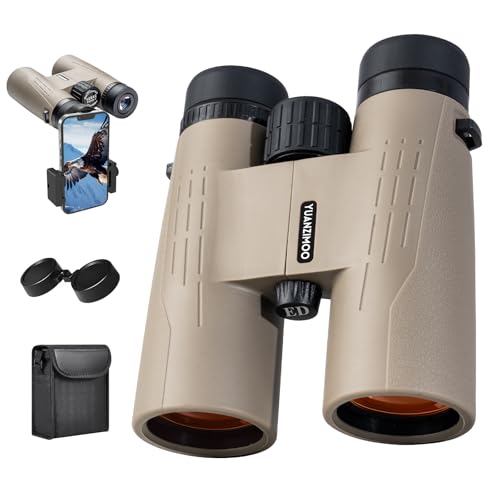
Best for: Casual birdwatchers and concertgoers
These $24.99 binoculars pair 12x magnification with 42mm objective lenses. The listed field of view is 383 feet at 1,000 yards, and the maker says they can provide a larger view from over 650 feet away. BAK4 prisms and fully multi-coated optics support brighter images in dim conditions, such as dawn or dusk. They are designed for birding, sports, travel, hunting, and outdoor events.
The foldable body fits more easily into a pocket or backpack than full-size binoculars. Its textured, angular housing is designed to improve grip and absorb some shock. A phone adapter comes in the box and is intended to fit most larger smartphones, including many models inside cases. That makes it possible to capture photos or video through the eyepieces, though phone alignment can take patience. The low-light feature helps near sunrise or sunset, but it should not be treated as true viewing in complete darkness.
Pros
- 12x magnification and 42mm lenses offer a detailed view for distant wildlife and field sports.
- BAK4 prisms and fully multi-coated optics support brighter low-light images.
- Foldable construction and the included phone adapter add travel convenience.
Cons
- At 12x, hand movement can make the image harder to hold steady without support.
- Low-light performance does not provide usable vision in total darkness, and no tripod mount is listed.
4. Pankoo 20×55 Binoculars

Best for: Dawn and dusk wildlife viewing
The Pankoo 20×55 binoculars are long-distance optics with 20x magnification and large front lenses. The listed feature describes those lenses as 56mm, while the product name says 55, so buyers should be aware of that small specification mismatch. At $40.49, they target shoppers who want strong magnification without moving into premium-priced equipment.
The large lenses are the main draw. A 56mm objective lens can collect more light than the smaller lenses found on many compact binoculars, which may help during dawn, dusk, landscape scanning, and outdoor sports. The 20x magnification also brings distant subjects closer, but it demands steadier handling. The listing calls them waterproof, yet it does not provide an IP rating or explain how much water exposure they can handle. That makes them more suitable for light outdoor use than serious wet-weather work.
Pros
- 20x magnification helps bring distant wildlife, scenery, and sports targets into a closer view.
- Large 56mm lenses can provide brighter images in lower-light conditions.
- The $40.49 price keeps high-magnification binoculars within a modest budget.
Cons
- 20x power can produce shaky views without a tripod or very steady hands.
- The large lenses make these binoculars bulkier than compact options, and the listing gives no weight or tripod details.
3. 18×50 Binoculars

Best for: Birdwatchers needing long-range views
The 18×50 binoculars pair 18x magnification with 50mm objective lenses. That large front lens can gather more light than compact models, while the wide viewing area suits birdwatching, sightseeing, and outdoor travel. At 1.1 pounds, the body folds for easier storage and remains light enough for one-handed adjustment.
Image quality gets help from BAK4 prisms and multilayer-coated lenses. This setup is designed to improve light transmission and preserve more natural colors. The IP67 waterproof rating also makes these binoculars suitable for rain, seaside use, and humid conditions. A phone adapter lets you attach a smartphone for distant photos, while the included tripod and adapter support adjustable height and multiple viewing angles. At $39.99, the package includes useful accessories for buyers who want more than basic binoculars.
Pros
- Strong reach: 18x magnification helps viewers inspect distant birds, scenery, and outdoor subjects.
- Better low-light potential: 50mm objective lenses, BAK4 prisms, and multilayer coatings support brighter, more natural-looking views.
- Useful outdoor setup: IP67 water resistance, a folding body, phone adapter, and tripod add flexibility for travel and extended viewing.
Cons
- High magnification needs stability: At 18x, hand shake can make the image jump, so the tripod may be necessary for steady viewing.
- Less compact than travel binoculars: The 50mm lenses provide more light but create a larger package than smaller 8x or 10x models.
2. 20×50 Waterproof Compact Binoculars for Adults

Best for: Budget-minded outdoor observers
This $29.99 binocular set pairs 20x magnification with 50mm objective lenses for distant viewing. The listed field of view is 168 yards at 1,000 yards, which suits bird watching, hiking, cruises, sports, and stargazing. A BAK4 Porro prism and multilayer-coated aspherical lenses aim to improve brightness, color, and edge-to-edge clarity. The 26mm eyepieces also give your eyes more room than smaller viewing ports.
Focusing is straightforward. Adjust the barrels to match your eyes, then turn the rubber-covered center wheel until the image becomes sharp. The body has a textured rubber coating for grip and impact protection. It is described as waterproof for outdoor use, but the instructions specifically say not to submerge it. At this price, the combination of high magnification, large lenses, and a compact design is the main appeal. Buyers should keep expectations realistic, since optical performance can vary in dim conditions and at extreme distances.
Pros
- Strong reach: 20x magnification and 50mm lenses help bring distant subjects closer.
- Useful viewing design: 26mm eyepieces and adjustable barrels support a wider, steadier view.
- Outdoor-friendly body: Textured rubber adds grip and basic impact and weather protection.
Cons
- 20x magnification can be hard to hold steady, especially while standing or tracking moving subjects.
- Waterproofing has limits: The binoculars should not be immersed, so they are not suited to underwater use or heavy water exposure.
1. 15×52 HD Binoculars

Best for: Long-range wildlife viewing
At $68.86, these binoculars use 15x magnification and 52mm objective lenses for distant wildlife, birds, hunting, and outdoor viewing. The 22mm eyepieces are larger than the 16mm and 20mm examples cited in the product details, which may make the view easier to frame. Fully multi-coated lenses and BAK4 prisms are intended to support contrast and color accuracy.
The low-light design includes 18mm BAK4 dielectric-coated prisms and high-transmission glass for overcast conditions, tree cover, dawn, and dusk. Twist-down rubber eyecups accommodate glasses or bare eyes. The included phone adapter uses rubber padding and screw locks, and it is described as compatible with phones with or without cases. Still, 15x magnification can make hand shake obvious, especially during phone photos. These binoculars are better for steady observation than fast-moving subjects.
Pros
- 15x magnification helps reveal distant wildlife details.
- 52mm lenses and specialized glass support low-light viewing.
- Adjustable eyecups work for glasses and non-glasses wearers.
Cons
- High magnification can make handheld views shaky.
- Tracking moving birds may take more effort than with lower-power binoculars.
Buying Guide
The most important factor is exit pupil, because it determines how much light reaches your eyes. For twilight viewing, choose a model with an exit pupil of at least 5mm, such as 8×42 or 7×50 binoculars.
- Objective lens size: Choose 42mm to 50mm lenses for evening use. Larger 56mm objectives collect more light but add weight and bulk.
- Magnification: Stay between 7x and 10x. A 10×50 model provides detail at distance, while 8×42 binoculars are steadier for handheld viewing.
- Glass and coatings: Look for BaK-4 prisms and fully multi-coated lenses. These features reduce light loss and improve contrast in dim scenes.
- Focusing and stability: Select a center-focus wheel that turns smoothly, plus a tripod socket for models over 30 ounces. High magnification becomes harder to hold steady.
- Weather protection and price: Choose nitrogen-purged, waterproof construction rated IPX7 if you expect rain. Reliable low-light models usually cost $150 to $500, while premium glass can exceed $1,000.
If you cannot have everything, prioritize exit pupil first, then choose the lightest objective size that meets your viewing needs.
Frequently Asked Questions
How do binoculars perform in low light?
Binoculars with 7x to 10x magnification and 42mm to 50mm objective lenses usually perform best in low light. Choose models with fully multi-coated glass and a wide exit pupil, which helps your eyes receive more light. A 7×50 design has a 7.1mm exit pupil, while 10×42 offers 4.2mm.
What features matter most in a low-light binocular?
Look for fully multi-coated lenses, a 4mm or larger exit pupil, and low-dispersion glass when choosing a low-light binocular. Lens coatings increase light transmission, while larger objectives collect more light. For example, a 42mm objective paired with 8x magnification creates a 5.25mm exit pupil, a useful middle ground for dusk wildlife viewing.
Can night vision binoculars replace regular low-light models?
Night vision binoculars can work after dark, but they are not always the best choice for natural low-light viewing. Most use infrared illumination and electronic sensors, which can alter colors and reveal your position to wildlife. Standard 8×56 or 7×50 optics often suit dusk better because they preserve a natural view without batteries.
Are 10x binoculars good in low light?
10x binoculars can work in low light, but 8x or 7x models usually provide a brighter, steadier view. Their higher magnification narrows the exit pupil and makes hand shake more noticeable. An 8×50 model has a 6.25mm exit pupil, while a 10×50 model has 5mm. That difference matters near dusk.
Conclusion
15×52 HD Binoculars remain the top recommendation for birders, hunters, and stargazers who need long-distance detail as daylight fades. If your priority is a lighter setup for hiking or quick wildlife viewing, choose a smaller, lower-power pair because it will be easier to carry and hold steady. Before buying, double-check the binoculars’ size, tripod and accessory compatibility, package quantity, and current price, since listings and bundles can change. Low-light performance also depends on lens coatings, eye relief, and how steadily you can hold the optical instrument. Choose the pair that fits your activity, carrying habits, and budget.
