
5 Best Desk for Editing for Home Studios
The Armocity Music Studio Desk is the best desk for editing for most buyers because it combines a dedicated work surface with built-in space for studio gear. Its music-focused layout gives editors room to position a monitor, speakers, keyboard, and other tools without spreading everything across a separate table. That focus makes it a practical choice for video, audio, and content work.
This guide is for creators who need a desk that keeps editing equipment organized without taking over the room. The key factors are desktop size and the desk’s ability to support monitors, speakers, storage, and daily accessories. Construction also matters, since a loaded workstation needs a stable frame and a surface that can handle regular use. The five picks below are ranked by their strengths, with clear reasons and honest drawbacks for each.
Quick Comparison
| # | Product | Best For | Price | |
|---|---|---|---|---|
| 1 | Armocity Music Studio Desk | Home recording setup builders | $169.99 | View → |
| 2 | SEDETA 63-Inch Electric Standing Desk | Sit-stand home office users | $269.99 | View → |
| 3 | PRAISUN 63-Inch L-Shaped Computer Desk | Corner workstation space savers | $99.99 | View → |
| 4 | PRAISUN Computer Desk | Budget desktop workspace users | $119.99 | View → |
| 5 | Final Cut Pro Shortcuts Mouse Pad | Final Cut Pro editors | $29.99 | View → |
5 Top Desks for Editing
These editing desks are ranked from fifth place to the top pick, based on workspace features, adjustability, and value.
5. Final Cut Pro Shortcuts Mouse Pad

Best for: Final Cut Pro beginners at desks
This 31.5-by-11.8-inch desk mat combines a mouse pad with a printed Final Cut Pro shortcut reference. Its extra-wide layout leaves room for a keyboard, mouse, and a few small desk items. The design targets beginners who want common commands visible without opening a separate cheat sheet. At $29.99, it costs more than a basic mouse pad, but it adds a dedicated editing reference.
The surface uses HD printing for clearer shortcut text and brighter colors. A spill-repellent coating allows cleanup with water or a damp cloth. The rubber base helps keep the mat in place, while stitched edges reduce fraying from regular use. Its broad shape can also protect more of a desk from scratches and everyday marks. Still, the printed guide is tied to Final Cut Pro, so it has limited value for users who edit with other software.
Pros
- The 31.5-by-11.8-inch size fits a full keyboard and mouse.
- Printed Final Cut Pro shortcuts keep frequently used commands nearby.
- Rubber backing, stitched edges, and a wipe-clean surface support regular desk use.
Cons
- The wide format needs substantial desk space and may not fit smaller work areas.
- The shortcut chart is specific to Final Cut Pro, limiting its usefulness with Premiere Pro, DaVinci Resolve, or other editors.
4. PRAISUN Computer Desk
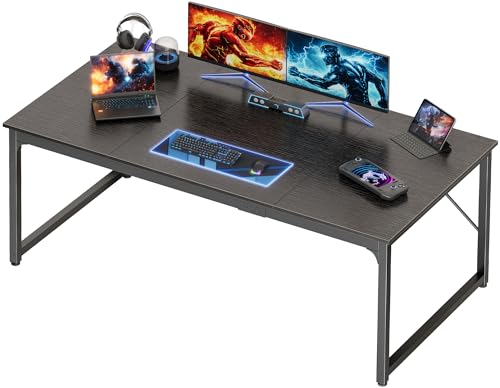
Best for: Remote workers needing extra desktop space
The PRAISUN computer desk measures 63 by 29.5 inches, giving you room for a laptop, lamp, planner, and second monitor. Its deeper surface can help keep work materials from crowding the keyboard. The open area below leaves space to stretch your legs or slide storage bins underneath, which suits taller users and small home offices.
A thick steel-tube frame, support bars, and adjustable feet are designed to reduce wobble on hardwood, carpet, or tile. The desktop uses FSC-certified wood. This desk can also work as a dorm study table, bedroom workstation, gaming surface, or simple vanity. Assembly uses labeled parts and step-by-step instructions, with the manufacturer estimating less than 40 minutes for one person. At $119.99, its main appeal is size rather than built-in features.
Pros
- The 63-by-29.5-inch desktop fits a laptop, second monitor, lamp, and paperwork.
- Adjustable feet and steel support bars can improve stability across different floor types.
- Open legroom works well for taller users and storage bins.
Cons
- The 63-inch width requires a fairly large area, so it may not suit compact bedrooms or narrow dorm rooms.
- There is no listed drawer, shelf, cable tray, or other built-in storage, so accessories and cords remain on or under the desk.
3. PRAISUN 63-Inch L-Shaped Computer Desk

Best for: Budget-conscious home office workers
The PRAISUN 63-inch L-shaped desk provides separate areas for a computer and paperwork, gaming, or study materials. Its 18.9-inch-deep main surface keeps the footprint fairly compact while still offering useful corner workspace. The reversible layout lets you place the side section on either side, and the movable monitor shelf can sit on the main or side desktop. At $99.99, it targets shoppers who want storage and charging features without paying for a premium wood desk.
A built-in charging station includes four AC outlets, one USB-C port, and one USB-A port. That setup can power a laptop, phone, tablet, and desk lamp without adding a separate power strip. Storage includes two fabric drawers, an open shelf, and one file drawer with a hanging bar for letter- or A4-size folders. Particle board, FSC-Certified wood, and reinforced steel tubing form the frame, while a rear crossbar adds support. The open space beneath the side section leaves room for your legs or a small pet bed. Numbered parts, instructions, and included tools should make assembly more manageable, though setup still takes time.
Pros
- Four AC outlets plus USB-C and USB-A ports reduce cord clutter.
- Reversible design and a movable monitor shelf suit changing room layouts.
- File storage, two fabric drawers, and an open shelf keep supplies nearby.
Cons
- Particle board can be less resistant to moisture and heavy impact than solid wood.
- The 18.9-inch depth may feel tight for large monitors, speakers, or deep accessories.
2. SEDETA 63-Inch Electric Standing Desk

Best for: Home offices needing flexible storage
The SEDETA 63-inch electric standing desk combines a work surface, filing storage, and charging access in one farmhouse-style workstation. Its 63 by 27.6-inch desktop gives room for a monitor, laptop, and everyday office supplies. A lifting motor adjusts the desk from 31 to 47 inches, while the keypad saves three preferred heights. That range also works with many walking pads.
Storage is a major strength. Three drawers hold smaller items, open shelves keep frequently used supplies close, and a CPU stand lifts the computer off the floor. The built-in power strip includes four outlets, two USB ports, and an on-off switch. Its industrial-grade steel T-frame supports up to 200 pounds, and the motor operates below 30 dB. The farmhouse finish comes from a wood-look P2 particle board top and reinforced white base. At $269.99, it offers a lot of built-in function for a single desk.
Pros
- Wide adjustment range: Moves from 31 to 47 inches with three saved height presets.
- Useful built-in storage: Three drawers, open shelves, and a CPU stand reduce desktop clutter.
- Convenient power access: Four outlets, two USB ports, and a main power switch support office electronics.
Cons
- Particle board top: P2 particle board costs less than solid wood and may show wear sooner with rough use.
- Limited desktop depth: At 27.6 inches deep, the surface may feel cramped with large monitors, speakers, and other accessories.
1. Armocity Music Studio Desk

Best for: Compact home music production setups
The Armocity Music Studio Desk is a 47-inch workstation for small recording rooms, editing spaces, and study areas. Its raised monitor shelf can hold two screens, while the lower pull-out tray fits a keyboard or controller. Three levels provide room for a laptop, speakers, audio gear, and external drives. At $169.99, it targets buyers who need dedicated studio storage without a large furniture footprint.
Built-in power adds useful convenience. The desk has three USB ports and two outlet plugs for devices such as a monitor, laptop, iPad, or keyboard controller. One included Velcro strip helps gather cables, though it will not replace a full cable-management system. Solid metal legs, a brace bar, and a wide leg shape support the frame, while the open design leaves space for comfortable seating. Assembly instructions label the parts clearly, and an electric screwdriver can speed the process.
Pros
- Three USB ports and two power outlets reduce the need for a separate charging hub.
- The 47-inch raised shelf can hold two monitors above the main work surface.
- Open metal legs and a brace bar provide legroom for seated work.
Cons
- The 47-inch width may feel tight with large monitors, studio speakers, and a full-size controller.
- Assembly is required, and the included cable organization is limited to one Velcro strip.
Buying Guide
For an editing workstation, the most important factor is usable surface area. A desk should fit your monitor, keyboard, speakers, and editing controls without forcing equipment to overlap.
- Desk size: Choose at least 60 inches wide and 30 inches deep for one monitor, speakers, and a keyboard. Pick 72 by 30 inches for two displays or larger control surfaces.
- Weight capacity: Look for a rated load of at least 150 pounds. A dual-monitor arm, computer tower, speakers, and accessories can quickly exceed 100 pounds.
- Height adjustment: A sit-stand model should cover roughly 28 to 48 inches. Electric adjustment is useful when editing for four or more hours at a time.
- Cable management: Require two or more cable openings, a rear tray, and space for a power strip. These features keep display and audio cables off the floor.
- Surface and frame: A 1-inch or thicker top resists flex better than thin particleboard. Steel legs and a five-year frame warranty provide useful durability at the $250 to $700 price range.
If you cannot have everything, prioritize a stable 60-inch-wide surface with enough depth for your editing setup.
Frequently Asked Questions
How wide should a desk for video editing be?
A desk for video editing should be at least 60 inches wide and 30 inches deep to hold two monitors plus editing gear comfortably. That size fits two 27-inch monitors, a keyboard, speakers, and an audio interface without crowding the work area. Choose 72 inches for three screens, a control surface, or paper notes.
What features should an editing workstation have?
A good editing workstation needs a rigid frame, a deep top, cable management, and enough load capacity for multiple screens. Look for a 1-inch-thick surface, rear cable openings, and a stated capacity of at least 150 pounds. Height adjustment can help during long sessions, while a matte finish reduces reflections from windows and monitor lights.
Can a standing desk work for video editing?
Yes, a standing desk can work well for editing if it stays stable at sitting and standing heights. Choose one with a height range of roughly 27 to 47 inches, depending on your height and chair. Check keyboard and monitor positions before buying, since wobble becomes distracting when trimming clips, adjusting audio, or using a graphics tablet.
Are corner desks good for editing setups?
Corner desks are useful for editing when you need separate zones for screens, speakers, and paperwork. An L-shaped layout with two 55-inch sides provides more surface than a straight desk while keeping equipment nearby. Check room measurements first, and leave at least 30 inches for chair movement and 3 inches behind the desk for cables.
Conclusion
Armocity Music Studio Desk is the strongest pick for editors who need a compact workstation with dedicated space for monitors, speakers, and recording gear. If your priority is a wider surface for multiple screens, paperwork, and a full-size keyboard, choose a larger L-shaped or straight studio desk instead. Before buying, double-check the desktop dimensions, shelf and rack compatibility with your equipment, the quantity of monitor stands or accessories included, and the current price, since listings can change. Also measure your room, doorways, and chair clearance before ordering. This desk makes the most sense when organized storage matters as much as editing space, but it may feel limiting for large displays or extensive hardware.
