
6 Best Headphones for Dubstep for Deep Bass
For most buyers, the OneOdio Wired Over-Ear Headphones are the best headphones for dubstep because the wired setup avoids charging limits. Their large earcups and over-ear design suit electronic tracks with heavy drops, while the straightforward build keeps the price approachable.
This guide is for listeners who want strong low-end sound at home, during travel, or at a desk. The key factors include earcup size, padding, cable length, and bass control, since muddy sound can hide vocals and high-frequency details. We also consider comfort during longer sessions and how easily each pair connects to common devices. The 6 picks below are ranked with clear reasons and honest drawbacks for each, so you can match a pair to your budget and listening setup.
Quick Comparison
| # | Product | Best For | Price | |
|---|---|---|---|---|
| 1 | OneOdio Wired Over-Ear Headphones | Budget listeners wanting deep bass | $31.99 | View → |
| 2 | Philips Over-Ear Wired Stereo Headphones | Home listeners needing long comfort | $19.99 | View → |
| 3 | Audio-Technica ATH-M20x Studio Monitor Headphones | Entry-level music production | $58.00 | View → |
| 4 | Koss KPH7 Portable Headphones | Kids needing lightweight headphones | $4.95 | View → |
| 5 | OneOdio A70 Bluetooth Over-Ear Headphones | Commuters wanting wireless listening | $49.99 | View → |
| 6 | OneOdio A71 Wired Over-Ear Studio Headphones | Musicians needing wired monitoring | $32.99 | View → |
Our 6 Top Headphone Picks for Dubstep
This ranked list counts down from the sixth pick to the top choice, based on bass response, comfort, and clarity.
6. OneOdio A71 Wired Over-Ear Studio Headphones

Best for: Budget home studio monitoring
The OneOdio A71 is a wired, over-ear headphone set for music playback, DJ work, and basic studio monitoring. Its 40mm drivers target clear detail across vocals, instruments, and electronic tracks. At $32.99, it offers useful connections without requiring a separate adapter. The included coiled cable is listed at 6.6 to 9.8 feet, with both 3.5mm and 6.35mm plugs for laptops, computers, amplifiers, keyboards, and guitars.
Comfort comes from soft padded ear cushions and an adjustable, stretchable headband. The padding also provides passive noise isolation, though it does not replace active noise cancellation. Each earcup swivels 90 degrees, so DJs can monitor with one ear while keeping the other open. A second audio port lets another listener connect a pair of headphones directly. That feature is handy for sharing a video or song, but compatibility may depend on the other headphones and source device.
Pros
- 40mm drivers provide detailed sound for home recording, DJ practice, and music listening.
- Both 3.5mm and 6.35mm plugs work with common audio equipment without an adapter.
- 90-degree swiveling earcups support single-ear monitoring during DJ sessions.
Cons
- The wired design offers no Bluetooth connection or wireless listening.
- Passive earcup padding reduces some outside noise but cannot actively cancel it.
5. OneOdio A70 Bluetooth Over-Ear Headphones

Best for: Budget-minded listeners and DJs
The OneOdio A70 is a $49.99 over-ear headphone set for wireless listening, wired playback, and basic studio work. Bluetooth mode offers up to 72 hours of playtime, while the included 3.5mm-to-3.5mm and 3.5mm-to-6.35mm cables keep music going after the battery is empty. That larger plug suits some mixers and audio equipment.
Its sound comes from 40mm neodymium drivers behind aluminum fascia panels. The design targets strong bass and a spacious stereo presentation, though the listed features do not promise a flat studio tuning. Soft memory cotton and protein leather cover the ear cushions. The earcups rotate, and the headband folds for easier storage. A built-in microphone supports hands-free calls with noise reduction. Audio sharing is another useful extra. Connect the main pair to a device, then pass sound to another headset through the included cables. The locking aux connection should also help prevent accidental cable pulls.
Pros
- Up to 72 hours of wireless playback reduces charging frequency.
- Includes both 3.5mm and 6.35mm wired connection options.
- Rotating earcups and a folding headband improve storage and fit.
Cons
- No active noise cancellation is listed, so outside sounds may remain noticeable.
- The large 6.35mm plug and wired sharing setup may feel bulky for travel.
4. Koss KPH7 Portable Headphones

Best for: Affordable everyday wired listening
The Koss KPH7 is a lightweight, portable headphone for simple audio use. It connects through a standard 3.5 mm plug and includes a 4-foot cord, so it works with many phones, tablets, laptops, and audio players that still have a headphone jack. Its adjustable headband helps create a more secure fit across different head sizes. The black design keeps the look basic and easy to match.
At $4.95, the price is the main attraction. These headphones offer a stated frequency range of 80 to 18,000 Hz, along with bass-focused sound and 91 dB SPL sensitivity. The 32-ohm impedance should suit common portable devices without demanding a dedicated headphone amplifier. The long-enough-for-handheld-use cable adds practical reach, though it may feel short at a desk or across a room. This is a straightforward choice for podcasts, casual music, schoolwork, or keeping a spare pair nearby. Buyers should keep expectations realistic. The low price favors basic function over advanced controls, wireless features, or premium sound tuning.
Pros
- Adjustable headband supports a more secure fit.
- 3.5 mm plug works with many wired audio devices.
- $4.95 price makes it a low-cost backup option.
Cons
- The 80 Hz lower frequency limit may miss some deep bass.
- The 4-foot cord can restrict movement away from a device.
3. Audio-Technica ATH-M20x Studio Monitor Headphones

Best for: Budget studio tracking and mixing
The Audio-Technica ATH-M20x is an over-ear monitor headphone built for recording, tracking, and mixing. It uses 40 mm drivers with rare earth magnets and copper-clad aluminum wire voice coils. At $58, it targets buyers who want a dedicated studio headset without paying for premium wireless features. The single-sided cable exit also keeps the wire away from one ear, which can make movement around a recording setup less awkward.
Its sound tuning gives extra attention to low frequencies, so kick drums, bass lines, and other low-end details should receive clear focus. The circumaural earcups surround the ears and help reduce outside noise in loud rooms. That passive isolation can help during vocal tracking or instrument recording, although it will not replace active noise cancellation. The build focuses on practical studio use rather than travel features. There is no stated wireless mode, microphone, or in-line control, so this is a straightforward wired tool for audio work. Buyers should also expect a studio-oriented presentation instead of the feature-packed design found on many everyday headphones.
Pros
- 40 mm drivers support detailed monitoring for tracking and mixing.
- Circumaural earcups help block external sound in busy rooms.
- Single-sided cable routing reduces wire clutter around the setup.
Cons
- Wired operation limits use with phones or devices lacking a headphone jack.
- No listed microphone, wireless connection, or active noise cancellation.
2. Philips Over-Ear Wired Stereo Headphones
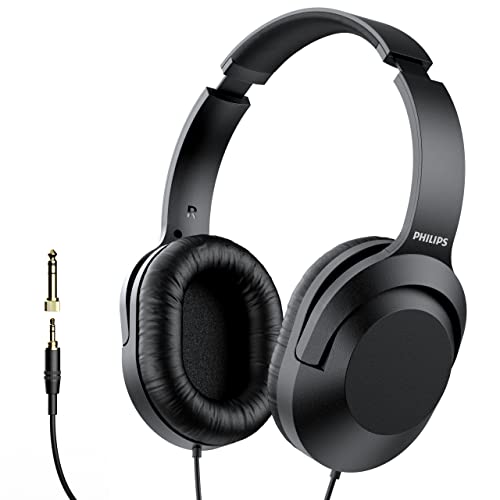
Best for: Home recording and keyboard practice
The Philips over-ear wired headphones use 40mm drivers and a standard 3.5mm plug for computers, tablets, keyboards, and other audio devices. A snap-on 6.3mm adapter fits larger studio and instrument outputs. The 2m cable gives useful reach at a desk or practice setup without needing an extension.
Soft ear cushions and a padded adjustable headband support longer listening sessions. The over-ear design provides passive noise isolation, though it will not block voices or household sounds like active noise-canceling headphones. The 90-degree rotating earcups also allow one-ear monitoring, which can help during DJ-style cueing or recording. At $19.99, the main appeal is broad compatibility at a low price. The design stays focused on wired listening, with no wireless features or battery to manage.
Pros
- 40mm drivers provide clear audio for podcasts, music, and basic monitoring.
- Included 3.5mm plug and 6.3mm adapter work with computers, keyboards, guitars, and studio gear.
- A 2m cable and rotating earcups add flexibility around desks and practice setups.
Cons
- The wired design offers no Bluetooth, wireless playback, or listed microphone.
- Passive isolation reduces some outside sound but cannot match active noise cancellation.
1. OneOdio Wired Over-Ear Headphones

Best for: Home DJing and instrument practice
The OneOdio Pro-10 is a wired, over-ear headphone set priced at $31.99. It uses 50mm speaker drivers with neodymium magnets to produce bass-heavy sound, clear vocals, and sharper high notes. The large ear cushions add padding and help reduce outside noise, while the adjustable, stretchable headband supports different head sizes. This design suits PC listening, keyboard practice, guitar work, and basic home recording.
The 90-degree swiveling ear cups are the key feature for DJ use. You can monitor one ear while keeping the other open to the room. The headphones accept either 3.5mm or 6.35mm audio connections, so they can work with phones, computers, mixers, amplifiers, and audio interfaces that have those jacks. A second audio port also lets another pair connect for shared listening. That is useful for watching videos together or checking a recording with someone else. Still, these remain simple wired monitors, not an all-purpose wireless headset.
Pros
- 50mm drivers deliver strong bass with clear vocals and crisp treble.
- 90-degree swiveling cups support one-ear DJ monitoring.
- Dual-size jack compatibility covers 3.5mm and 6.35mm equipment.
Cons
- Wired operation means there is no Bluetooth or wireless listening option.
- Large over-ear cushions may feel warm during long sessions, especially in hot rooms.
Buying Guide
Controlled sub-bass is the most important factor for dubstep listening. Look for headphones that reach 20 Hz or below without muddying vocals, snares, or fast bass drops.
- Bass response: Choose a model with a stated range beginning at 20 Hz or lower. A mild bass boost around 40–100 Hz can add impact, but heavy boosts may blur layered tracks.
- Driver size: Select 40–50 mm dynamic drivers for a fuller low end. Driver size alone does not guarantee better sound, so compare tuning and reviews too.
- Sound isolation: Closed-back earcups block outside noise and keep bass from leaking. They work best for commuting, gaming, and shared rooms.
- Connection and battery: Wired headphones avoid charging and often work well with an amplifier. For wireless pairs, target at least 30 hours per charge, plus USB-C charging.
- Comfort and fit: Look for padded earcups that fully surround your ears, a headband with adjustable length, and a weight below about 12 ounces. A firm seal improves bass consistency.
- Price and features: Solid wired options often cost $60–$150, while wireless models with strong codecs and noise cancellation commonly reach $150–$350. Check compatibility before paying more.
If you cannot have everything, prioritize controlled low-frequency response and a secure earcup seal.
Frequently Asked Questions
How do I choose headphones for dubstep?
Choose closed-back headphones with extended low-bass response, controlled mids, and comfortable padding for dubstep. Look for a response reaching roughly 20 Hz, plus earcups large enough to seal around your ears. A detachable cable helps with replacements, while moderate clamping force matters during long bass-heavy sessions.
What headphone features matter most for bass-heavy electronic music?
The most useful features are deep sub-bass, clear vocals, secure fit, and enough power from your source. An impedance around 16 to 80 ohms works with many phones and laptops, while a 40 mm or larger driver can produce fuller impact. Avoid models that make kick drums muddy or cymbals harsh at high volume.
Can wireless headphones handle dubstep well?
Yes, wireless headphones can handle dubstep, but choose a model with low-latency Bluetooth or a wired mode for beat-sensitive listening. Bluetooth latency can sit around 100 to 200 milliseconds on some connections, which may bother DJs and producers. For casual listening, strong battery life, stable pairing, and an optional 3.5 mm cable matter more than studio-grade timing.
Are open-back headphones good for dubstep?
Open-back headphones are good for dubstep at home when you want a wider, more natural presentation, but closed-back designs work better in noisy rooms. Open grilles also let outside sound in, so they suit quiet rooms rather than buses or shared offices. Choose closed earcups for stronger isolation, or open backs if you mix tracks and need to hear detail around bass drops.
Conclusion
OneOdio Wired Over-Ear Headphones remain the top pick for listeners who want powerful bass, a wired connection, and a low-cost pair for dubstep at home or on the go. If your priority is wireless freedom, active noise cancellation, or a lighter fit, choose a different model built around those needs instead. Before buying, double-check the ear-cup size, device compatibility, included quantity, and current price, since listings can change and some options may suit single-device use better than others. A good pair should deliver clear vocals, controlled sub-bass, and enough comfort for long sessions without forcing you to pay for features you will not use. Match the headphones to your setup and listening habits.
