
6 Best 8 Inch Dobsonian Telescope for Deep-Sky Views
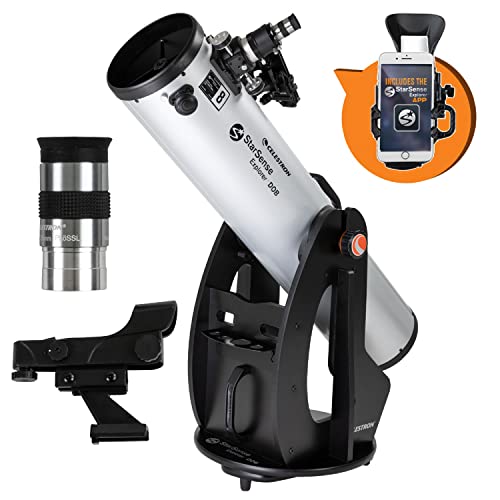
The Celestron StarSense Explorer 8″ Dobsonian Telescope is the best 8 inch dobsonian telescope for most buyers. Its main strength is the StarSense smartphone guidance system, which helps you locate stars, planets, and deep-sky objects with less guesswork. The 8-inch primary mirror also gathers enough light for detailed views from a dark location. Its tabletop-style Dobsonian mount keeps the design simple and practical.
This guide is for new skywatchers and experienced observers who want strong views without a motorized setup. The most important factors are the 8-inch aperture, the telescope’s overall size and weight, and how easily the mount tracks objects by hand. Eyepiece quality and phone compatibility also affect day-to-day use. The six picks below are ranked with clear reasons and honest drawbacks for each, so you can choose the right scope for your space and observing goals.
Quick Comparison
| # | Product | Best For | Price | |
|---|---|---|---|---|
| 1 | Celestron StarSense Explorer 8" Dobsonian Telescope | First-Time Deep-Sky Observers | $879.00 | View → |
| 2 | Sky-Watcher Classic 200 Dobsonian Telescope | Traditional Backyard Stargazers | $725.00 | View → |
| 3 | Sky-Watcher Flextube 200 Dobsonian Telescope | Compact-Space Telescope Owners | $850.00 | View → |
| 4 | Celestron StarSense Explorer Dobsonian Telescope | Smartphone-Guided Astronomy Beginners | $1,199.00 | View → |
| 5 | Sky-Watcher S11800 GoTo Dobsonian Telescope | Automated Object-Finding Enthusiasts | $1,625.00 | View → |
| 6 | Celestron NexStar 8SE Computerized Telescope | Serious Planetary Viewing Hobbyists | $1,499.00 | View → |
6 Top Eight-Inch Dobsonian Telescopes
This ranked list counts down from the sixth pick to the top telescope, with standout features, tradeoffs, and value considered.
6. Celestron NexStar 8SE Computerized Telescope

Best for: Serious beginners seeking guided deep-sky viewing
At $1,499, the Celestron NexStar 8SE is a computerized Schmidt-Cassegrain telescope built around an 8-inch optical tube. Its aperture collects enough light for detailed lunar craters, Jupiter’s cloud bands, and brighter galaxies or globular clusters. The familiar orange tube keeps the design compact compared with many larger reflector telescopes, but this is still more involved than a small manual scope.
The computerized GoTo mount gives you access to more than 40,000 objects through the NexStar+ hand control. After alignment, it can move to selected targets and track them as they cross the sky. Celestron’s SkyAlign system uses three bright stars or planets, so you do not need to identify them by name. That makes the telescope approachable for new users who want guided observing instead of star charts. The 2-year US warranty and unlimited technical support add useful protection at this price.
Pros
- An 8-inch aperture supports detailed views of the Moon, Jupiter, and many deep-sky targets.
- The GoTo system searches a database of over 40,000 objects and tracks selected targets.
- SkyAlign can complete alignment using three bright stars or planets.
Cons
- The computerized mount needs a reliable power source and alignment before observing begins.
- At $1,499, it costs far more than a basic manual telescope, and the larger optical tube is less grab-and-go.
5. Sky-Watcher S11800 GoTo Dobsonian Telescope

Best for: serious backyard observers wanting GoTo convenience
The Sky-Watcher S11800 is an 8-inch collapsible Dobsonian telescope with a 1,200mm focal length. Its large aperture gathers more light than smaller tabletop scopes, making it better suited to planets, star clusters, and many deep-sky targets. The optical tube weighs 24 pounds, while the assembled base weighs 33 pounds, for a total of 57 pounds.
Its collapsible strut system shortens the tube for transport and storage, while the design aims to retain collimation during setup. A built-in Wi-Fi signal lets you control the telescope from a smartphone or tablet. The SynScan system also includes a 42,000-plus object database and automated tracking through DC motors with all-metal gearing. Fully multi-coated borosilicate mirrors provide 94% reflectivity. The package includes a 2-inch Crayford-style focuser, a 1.25-inch adapter, 25mm and 10mm wide-angle eyepieces, and a 9×50 straight-through finder. At $1,625, it targets observers who want substantial light-gathering power without moving to a more complex optical design.
Pros
- The 8-inch mirror collects plenty of light for deep-sky observing.
- Built-in Wi-Fi and GoTo tracking reduce manual object searching.
- Included eyepieces, focuser adapter, and finder make it usable out of the box.
Cons
- The 57-pound assembled weight still requires two-part lifting and storage space.
- A Dobsonian base has no tripod-style height adjustment, which can limit viewing comfort on uneven ground.
4. Celestron StarSense Explorer Dobsonian Telescope

Best for: First-time deep-sky observers with space
The Celestron StarSense Explorer 10-inch is a manual Dobsonian telescope for visual astronomy. Its 254mm Newtonian reflector gathers enough light for lunar detail, bright planets, and deep-sky objects such as the Orion Nebula and Andromeda Galaxy. High-reflectivity XLT coatings support brighter, sharper views, while the altazimuth base keeps the design straightforward. At $1,199, it targets buyers who want a serious home telescope without a computerized mount.
Its strongest feature is the phone-assisted locating system. Place a compatible smartphone in the dock, open the StarSense Explorer app, and follow the arrows to a target. The app reads star patterns to estimate the telescope’s position, then signals when the object sits near the eyepiece view. It can also suggest worthwhile objects for a specific time and location. That helps in city skies, though dark locations reveal more galaxies and nebulae. Celestron includes a two-year US warranty and unlimited support from US-based experts.
Pros
- The 254mm reflector provides strong light-gathering capacity for planets, nebulae, galaxies, and star clusters.
- StarSense sky recognition helps locate targets without requiring advanced star-chart skills.
- The stable manual altazimuth base keeps setup and target movement simple.
Cons
- The 10-inch tube and Dobsonian base need substantial storage and a suitable transport plan.
- Manual tracking requires frequent hand adjustments, especially when viewing planets at higher magnification.
3. Sky-Watcher Flextube 200 Dobsonian Telescope

Best for: Beginners seeking deep-sky views
At $850, the Sky-Watcher Flextube 200 is an 8-inch Dobsonian telescope built for bright views of the Moon, planets, and many deep-sky objects. Its collapsible strut system shortens the optical tube for transport and storage, while the design aims to retain collimation. The included package covers basic observing needs, with a 2-inch Crayford-style focuser, 1.25-inch adapter, 25mm and 10mm wide-angle eyepieces, and an 8×50 right-angle finder.
The 94% reflective, fully multi-coated borosilicate mirrors should provide strong light gathering for the price. Teflon bearings support smooth left-to-right movement, and tension-control handles help manage balance as accessories change. This is still a large telescope. The listed tube weight is 24 pounds, while the base weighs 26 pounds, totaling 50 pounds, despite the stated 40-pound assembled weight. Buyers should confirm the current manufacturer specifications before purchase.
Pros
- An 8-inch aperture gathers substantially more light than smaller beginner scopes.
- Collapsible struts make the tube easier to store and transport.
- The package includes two eyepieces, a finder, and both focuser sizes.
Cons
- The listed 24-pound tube and 26-pound base add up to 50 pounds, so the advertised assembled weight needs verification.
- Manual Dobsonian tracking requires frequent hand adjustments, especially at higher magnification.
2. Sky-Watcher Classic 200 Dobsonian Telescope

Best for: First-time deep-sky observers
The Sky-Watcher Classic 200 is an 8-inch solid-tube Dobsonian telescope with a 1,200mm focal length. Its parabolic primary mirror uses Radian Aluminum Quartz coating, while the fully multi-coated borosilicate mirrors reflect 94% of incoming light. The listed limiting magnitude is 14.2, giving this scope useful reach for planets, star clusters, nebulae, and brighter galaxies.
The package includes a 2-inch Crayford-style focuser, a 1.25-inch adapter, 25mm and 10mm wide-angle eyepieces, and a 9×50 straight-through finder. Teflon bearings support smooth left-to-right movement, while the tension-control handles help the tube move accurately without requiring perfect balance. The assembled scope weighs 45 pounds, split between a 20-pound optical tube and 25-pound base. At $725, it offers a large aperture with a simple, traditional setup rather than electronics or automated alignment.
Pros
- An 8-inch mirror gathers substantially more light than smaller beginner scopes.
- The included 25mm and 10mm eyepieces provide two useful starting magnifications.
- Teflon bearings and tension handles make manual aiming easier to control.
Cons
- The 45-pound assembled weight and solid tube can be awkward to carry or store.
- The mount has no listed motorized tracking, so objects require manual repositioning as they cross the sky.
1. Celestron StarSense Explorer 8″ Dobsonian Telescope
Best for: First-time visual astronomy families
The Celestron StarSense Explorer 8-inch Dobsonian is a manual reflector telescope for viewing the Moon, planets, star clusters, and brighter deep-sky objects. Its 203mm Newtonian optical tube uses high-reflectivity XLT coatings, which can help produce clearer, brighter views than smaller beginner scopes. The sturdy altazimuth Dobsonian base moves up, down, and side to side without complicated controls.
Its strongest feature is the phone-guided setup. After docking a compatible smartphone and opening the StarSense Explorer app, sky-recognition technology analyzes star patterns and identifies the telescope’s position. On-screen arrows guide you toward selected targets, while a green bullseye signals alignment. The app also suggests objects based on your location and viewing time. That makes finding Jupiter, Saturn, the Orion Nebula, or Andromeda Galaxy less frustrating for new users. At $879, this is a serious investment, but the included two-year US warranty and unlimited support add useful ownership coverage.
Pros
- 203mm reflector gathers substantial light, supporting detailed views of the Moon, planets, and brighter nebulae.
- StarSense navigation reduces guesswork, using your phone to locate targets without requiring advanced sky knowledge.
- Manual Dobsonian controls stay simple, with smooth left-right and up-down movement.
Cons
- The base does not motorize tracking, so you must nudge the telescope as objects move across the sky.
- The $879 price is high for a beginner scope, especially if you still need accessories or a smartphone.
Buying Guide
The mount is the most important factor when choosing an 8-inch reflector. A steady, smoothly moving Dobsonian base keeps planets centered and prevents vibrations from ruining fine detail.
- Optical quality: Choose a 203mm mirror with a focal ratio near f/6, such as 1200mm, for sharp planetary views and manageable collimation.
- Mount stability: Look for a solid particleboard or plywood base with smooth altitude and azimuth movement. Vibrations should settle within about two seconds after focusing.
- Portability: An 8-inch tube often measures about 45 to 50 inches long and weighs 20 to 30 pounds with its base. Check that both pieces fit your vehicle and storage space.
- Eyepiece selection: A useful starter set includes 25mm and 10mm eyepieces, providing roughly 48x and 120x with a 1200mm focal length. A 6mm eyepiece adds about 200x for steady nights.
- Included accessories: A red-dot finder, dust caps, and a cooling fan add practical value. Expect to pay about $450 to $800 for a new model, depending on the accessories and mount design.
If you cannot have everything, prioritize mount stability and smooth tracking over extra accessories or a larger eyepiece kit.
Frequently Asked Questions
How does an 8-inch Dobsonian telescope compare with smaller models?
An 8-inch Dobsonian gathers enough light for detailed views of the Moon, planets, and many bright deep-sky objects at a moderate price. Its 203mm mirror gives more resolving power than smaller 6-inch models, while the simple tabletop or floor-mounted design keeps setup quick. It lacks automatic tracking.
What should I look for when choosing an 8-inch reflector?
Look for a rigid tube, a smooth altitude mount, a well-supported 203mm primary mirror, and a focuser that accepts common eyepieces. Check the telescope’s total weight and tube length before buying, since many full-size models need around 4 feet of storage space and two-handed carrying.
Can an 8-inch Dobsonian telescope show planets clearly?
Yes, an 8-inch Dobsonian can show clear views of Jupiter’s cloud bands, Saturn’s rings, and lunar craters when the optics are aligned and the air is steady. At useful magnifications around 100x to 200x, atmospheric turbulence often limits detail more than the mirror does.
Are 8-inch Dobsonian telescopes good for beginners?
Yes, these telescopes suit beginners because they combine simple setup, strong light gathering, and straightforward manual aiming. A typical model has no motor, app, or battery, so users must learn the sky and nudge the tube by hand. Its main drawback is size, with many weighing roughly 40 to 55 pounds.
Conclusion
Celestron StarSense Explorer 8″ Dobsonian Telescope is the top recommendation for beginners, families, and casual observers who want strong deep-sky views without learning a complex computerized mount. If your priority is easy transport or a lower price, choose a six-inch Dobsonian instead, since its shorter tube and lighter base take less room in a car or closet. Before buying, double-check the telescope’s physical size, accessory compatibility, included eyepiece quantity, and current price, since retailer listings and bundles can change. An eight-inch mirror needs a stable storage spot and clear outdoor access. You will also need patience for cooldown, dark skies, and time under the stars. That combination matters as much as the optical design.
