
3 Best Laptop for Biotechnology Students for Lab Work
HP 14 Student Laptop is the top pick for most buyers. For the best laptop for biotechnology students, its main advantage is balanced value: a portable 14-inch computer aimed at coursework, research, and lab documentation without premium pricing. Exact processor, memory, storage, and operating system can vary by listing, so check the configuration before ordering.
This guide is for biology, biotechnology, and related science students who need one computer for papers, spreadsheets, online classes, data review, and presentations. The key factors are battery life and memory, with screen size and storage close behind. A lighter 14-inch chassis helps on campus, while at least 8GB of RAM gives typical school software more breathing room. The 3 picks below are ranked with clear reasons and honest drawbacks for each, so you can match the laptop to your workload and budget.
Quick Comparison
| # | Product | Best For | Price | |
|---|---|---|---|---|
| 1 | HP 14 Student Laptop | Budget-conscious college note-takers | $248.00 | View → |
| 2 | HP 14 Student Laptop | Remote learners needing basic computing | $246.88 | View → |
| 3 | Im The Biotechnology Student Elf Backpack | Biotech students carrying lab essentials | $42.99 | View → |
3 Laptop Picks for Biotechnology Students
This ranked list counts down from a capable budget model to the top laptop for demanding coursework, coding, and lab data analysis.
3. Im The Biotechnology Student Elf Backpack

Best for: Biotech students carrying sports gear
The Im The Biotechnology Student Elf Christmas Sport Backpack combines a holiday-themed design with storage for school, commuting, and workouts. Its 600D poly PVC construction is built for regular use, while the padded 18-inch laptop compartment gives a separate space for a larger computer. A ventilated shoe and gear section helps keep footwear apart from books, clothing, and electronics.
Comfort features are more substantial than those on a basic school bag. Padded shoulder straps, an adjustable sternum strap, and a cushioned back can help spread the load during longer walks. The matte-coated zippers add a cleaner finish, and the integrated carry handle gives you another way to lift the bag. A fence hook is useful for lockers, gym areas, or sports benches. At $42.99, it fits the midrange price bracket for a backpack with dedicated laptop and shoe storage. Still, buyers should check their laptop dimensions before ordering, since the listed 18-inch compartment does not guarantee compatibility with every large model.
Pros
- Padded 18-inch laptop compartment protects a computer from the rest of the load.
- Ventilated shoe and gear storage separates footwear from school supplies.
- Sternum strap, padded shoulder straps, and cushioned back support heavier daily loads.
Cons
- The separate shoe compartment may reduce usable room for books and clothing.
- An 18-inch compartment may not fit oversized laptops or thick protective cases.
2. HP 14 Student Laptop

Best for: Budget-conscious students and families
The HP 14 is an entry-level Windows 11 laptop for schoolwork, web browsing, documents, and video calls. Its Intel Celeron N150 quad-core processor handles everyday tasks, while 4GB of DDR4 memory supports basic multitasking. Storage comes from a 128GB UFS drive, which should provide quicker startup than a mechanical hard drive, though the capacity is limited. The package also includes one year of Microsoft 365 with Copilot AI.
Its 14-inch HD BrightView display has a 1366×768 resolution and an anti-glare coating. That size keeps the computer fairly portable, while the Willow Green finish adds a distinct look. Wi-Fi 6 supports newer wireless networks, and the included 45W USB-C PD charger can help with travel. At $246.88, this laptop targets buyers who need a low-cost computer for classes, email, streaming, and office files rather than demanding software.
Pros
- Quad-core Intel Celeron N150 provides a suitable base for documents, browsing, and video calls.
- Wi-Fi 6 can offer better wireless performance with a compatible router.
- One year of Microsoft 365 with Copilot AI adds useful software for school and office tasks.
Cons
- 4GB of RAM limits heavier multitasking, large spreadsheets, creative apps, and browser-heavy workloads.
- The 128GB UFS storage and 1366×768 display are modest, so buyers may need external storage and should not expect a sharp screen or strong gaming performance.
1. HP 14 Student Laptop
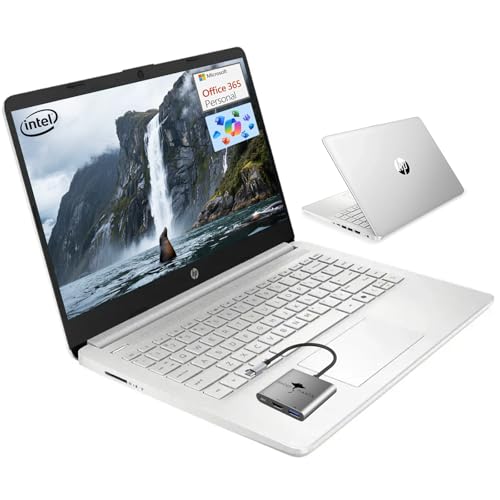
Best for: Students with basic schoolwork needs
This natural-silver HP laptop is a compact Windows 11 computer for schoolwork, web browsing, video calls, and home entertainment. Its 14-inch BrightView display uses a 1366×768 resolution and an anti-glare coating. Inside, the Intel Celeron N150 provides four cores, while 4GB of DDR4 memory handles everyday apps. HP markets the processor as an alternative to some Core i3 systems, but real performance depends on the specific workload.
Storage comes from a 128GB UFS drive, which should cover documents, assignments, photos, and a modest app collection. Wi-Fi 6 supports newer wireless networks, and the included 45W USB-C PD charger can reduce charging time compared with basic adapters. Buyers also receive one year of Microsoft 365 with Copilot AI. At $248, this laptop focuses on portability and low-cost school use rather than high-end performance.
Pros
- Four-core Intel Celeron N150 suits documents, browsing, and video calls.
- The 14-inch anti-glare display offers a practical size for school bags.
- Windows 11 and one year of Microsoft 365 are ready to use.
Cons
- 4GB of RAM can limit heavier multitasking and newer applications.
- The 128GB UFS storage is modest, with less capacity than many SSD laptops.
Buying Guide
The most important factor is sufficient memory, because biotechnology coursework can involve genomic datasets, statistical software, and several applications open together. Choose a computer with at least 16GB of RAM, or 32GB if your budget allows.
- Memory: Select 16GB RAM as the minimum. Choose 32GB for larger sequencing files, virtual machines, or frequent multitasking.
- Processor: Look for a recent Intel Core i5, Core Ultra 5, or AMD Ryzen 5 processor with at least 6 cores. Higher-tier chips help with simulations and data analysis.
- Storage: Buy at least a 512GB solid-state drive. A 1TB SSD gives more room for datasets, lab reports, software, and backups without relying on external storage.
- Battery and weight: Target 8 hours or more of claimed battery life and a weight below 4 pounds. A 13- to 15-inch screen balances portability with spreadsheet and coding space.
- Ports and display: Choose a 1080p or sharper screen, plus USB-C, USB-A, and HDMI when possible. These ports simplify projector use, external drives, and laboratory equipment connections.
If you cannot meet every requirement, prioritize 16GB of RAM and a modern six-core processor, since upgrading those parts later may be difficult or impossible.
Frequently Asked Questions
How much RAM should a biotechnology student’s laptop have?
Choose a laptop with at least 16GB of RAM for biotechnology coursework. That capacity handles spreadsheets, statistical software, research databases, and many browser tabs more comfortably than 8GB. Choose 32GB if you expect to run virtual machines, large genomic datasets, or several analysis programs at the same time.
What processor is suitable for biotechnology students?
A recent Intel Core Ultra 5, Core i7, or AMD Ryzen 5 processor suits most biotechnology students. Aim for at least four modern performance cores and a current-generation chip. Heavier bioinformatics workflows can benefit from eight or more cores, but processor speed alone cannot replace sufficient RAM or fast storage.
Can a laptop run bioinformatics and laboratory software?
Yes, a laptop with 16GB of RAM, a modern processor, and a 512GB solid-state drive can run many bioinformatics and laboratory applications. Software requirements vary, so check each program before buying. Some demanding tools require Linux, extra storage, or access to a university server for large datasets.
Are lightweight laptops good for biotechnology majors?
Lightweight laptops work well for biotechnology majors when they include strong battery life, comfortable keyboards, and enough memory for coursework. A model weighing about 3 pounds is easier to carry across campus, but thin designs may offer fewer ports, limited cooling, or no upgradeable RAM for future software demands.
Conclusion
The HP 14 Student Laptop is the top pick for biotechnology students who need an affordable, portable computer for coursework, research, writing, video lectures, and everyday data work without paying for premium hardware. If your priority is heavier computation, larger datasets, or specialized lab software, choose a laptop with a stronger processor, more memory, and better upgrade options instead, since demanding biology tools can outgrow a basic student machine quickly. Before buying, double-check the screen size and weight, compatibility with your school’s software and lab platforms, the quantity of included storage and memory, keyboard layout, warranty coverage, and current price, because retailer bundles and configurations can change.
