
7 Best Telescope Under 100 for Beginners
The PhysioPhyx Monocular-Telescope is the top pick for most buyers and earns our best telescope under 100 spot because it offers a simple, portable way to view distant subjects without a bulky setup. This single-eye scope suits casual stargazing, birdwatching, sports, and travel, making it a flexible choice for shoppers who want one optic for several uses.
This guide is for anyone shopping for an affordable telescope or monocular for outdoor viewing. Magnification, objective-lens size, weight, and tripod support matter most in this category. Higher magnification can reveal more detail, but shaky views quickly reduce its value. A larger front lens can gather more light, while a lighter body travels more easily. The seven picks below are ranked with clear reasons and honest drawbacks for each, so you can match a model to your budget, viewing plans, and comfort with setup.
Quick Comparison
| # | Product | Best For | Price | |
|---|---|---|---|---|
| 1 | PhysioPhyx Monocular-Telescope | Lightweight Outdoor Viewing | $59.99 | View → |
| 2 | Monocular Telescope with Smartphone Adapter | Smartphone Photo Capture | $59.99 | View → |
| 3 | 80×100 Monocular with Smartphone Adapter and Tripod | Long-Range Tripod Viewing | $79.99 | View → |
| 4 | Monocular Telescope with Tripod & Phone Holder | Stable Phone-Assisted Observation | $33.99 | View → |
| 5 | Kids Beginner Telescope | Young Stargazing Beginners | $26.99 | View → |
| 6 | 80×100 Monocular Telescope | High-Magnification Scenic Viewing | $25.99 | View → |
| 7 | Monocular Telescope with Tripod and Phone Adapter | Handheld and Tripod Flexibility | $79.99 | View → |
7 Budget Telescopes Worth Considering
The list is ranked by value, ease of use, and viewing potential, counting down to the top pick.
7. Monocular Telescope with Tripod and Phone Adapter

Best for: Bird watchers using a tripod
The Monocular Telescope 80×100 is a compact viewing scope for outdoor observation. Its advertised 80×100 magnification rating and adjustable zoom aim to bring distant birds, animals, and landscape details closer. The green rubber exterior adds grip and helps protect the body from minor bumps and scratches. At $79.99, it targets shoppers who want more reach than standard binoculars without buying a larger spotting scope.
A dual-focus wheel system allows quick adjustments for distant subjects. The package includes a tripod and a smartphone adapter, so users can steady the view and capture images through a phone. The bracket is designed to fit a wide range of smartphone models, but phone case thickness and camera placement may affect alignment. This scope suits bird watching, hunting, hiking, camping, and wildlife viewing. Its main appeal is the combination of adjustable magnification, phone sharing, and included support gear. The listed magnification is high, so a tripod will likely be more useful than handheld viewing at the longest setting.
Pros
- Adjustable zoom helps users frame nearby or distant subjects.
- Dual focus wheels allow faster, more precise image adjustment.
- Included tripod and phone adapter support steadier photos and remote viewing.
Cons
- High magnification can make handheld views shaky, especially at maximum zoom.
- The product listing does not provide the zoom range, field-of-view measurement, or tripod height, making performance harder to judge before purchase.
6. 80×100 Monocular Telescope

Best for: Budget-minded bird and wildlife observers
This 80×100 monocular telescope combines claimed 80x magnification with a 100mm objective lens for viewing distant scenery, birds, and wildlife. Its large front lens should gather more light than a smaller optic, while fully multi-coated lenses aim to improve brightness and detail. A BAK-4 prism supports contrast in lower-light conditions, such as early morning or dusk.
The included phone adapter lets you photograph or record through the eyepiece with most smartphones. A reinforced tripod helps limit shake, which matters at 80x magnification. One-hand focusing keeps setup simple, and the eyepiece is designed for use with glasses. The lightweight body fits in a backpack or larger pocket, making it practical for hiking, camping, travel, and casual wildlife viewing. At $25.99, the feature list is extensive, but buyers should keep expectations realistic for image quality and long-distance stability at this price.
Pros
- The 100mm objective lens and fully multi-coated optics support brighter views than basic small-lens monoculars.
- The included tripod reduces hand movement during high-magnification viewing and phone recording.
- The phone mount, glasses-friendly eyepiece, and one-hand focus add useful convenience outdoors.
Cons
- At 80x magnification, even small movements can blur the view, so the tripod is close to essential.
- “Fits most smartphones” is not universal, and phone alignment may vary by device size and camera position.
5. Kids Beginner Telescope

Best for: Children learning basic stargazing
This 50mm silver beginner telescope is designed for children ages 6 to 12. It offers a simple way to explore the Moon, practice following setup steps, and spend time away from screens. The package includes a tripod, finderscope, two eyepieces, and a Barlow lens. The eyepieces measure 6mm and 20mm, while the listed maximum magnification is 100x. Those parts give children several pieces to assemble and compare during play.
The included Moon observation guide adds useful direction for young learners. Children can follow simple activities, record what they see, and discuss questions with a parent. That makes this more than a viewing tool, though it remains a basic starter telescope rather than a serious astronomy instrument. The 50mm opening can show bright lunar features, but its small size is not suited to faint deep-sky targets. At $26.99, the main appeal is the complete learning kit and low entry price. Buyers should expect hands-on setup, not instant, detailed views.
Pros
- Includes a tripod, finderscope, two eyepieces, and a Barlow lens.
- The Moon guide supports observation, recording, and parent-child activities.
- A $26.99 price keeps introductory astronomy accessible.
Cons
- The 50mm aperture limits views of faint stars and deep-sky objects.
- Children may need adult help aligning the finderscope and assembling the accessories.
4. Monocular Telescope with Tripod & Phone Holder

Best for: Casual bird watching and sightseeing
This 80×100 monocular is an outdoor viewing scope with a 100mm objective lens, a phone adapter, and a small tripod. Its claimed 80x magnification can bring distant birds, wildlife, or landscape details much closer. The rubberized grip supports one-handed handling, while the twist-up eyecup can accommodate glasses. The included kit also arrives in a gift-ready box.
Its BAK-4 prism and fully multi-coated lenses aim to improve brightness and edge clarity. The manufacturer claims light transmission of up to 99.5%, though real results can vary with weather, focus, and viewing distance. The smartphone holder lets you record through the eyepiece, while the tripod can reduce shake for still subjects. A moisture-resistant build adds useful protection for hikes, camping trips, and wildlife viewing. Still, the 100mm front lens makes this larger than a pocket monocular.
Pros
- The 100mm objective lens gathers more light than many compact scopes, which helps during overcast daytime viewing.
- BAK-4 glass and multi-coated optics can produce brighter images with less color fringing.
- The included phone mount and mini tripod support hands-free viewing and basic photo capture.
Cons
- 80x magnification is difficult to hold steady by hand, especially for moving subjects or distant details.
- The product does not list a waterproof rating, phone compatibility range, or tripod height, so outdoor protection and setup limits remain unclear.
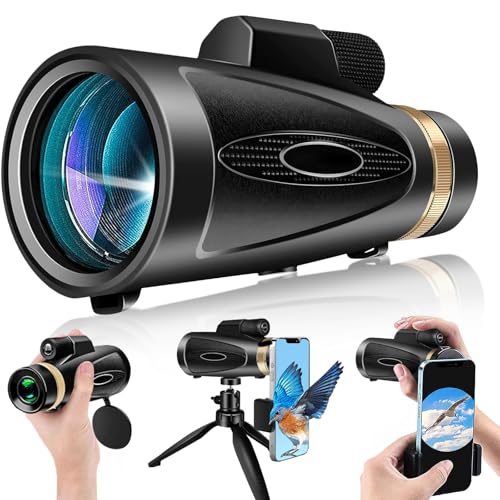
3. 80×100 Monocular with Smartphone Adapter and Tripod
Best for: Birdwatchers using a tripod
This monocular is designed for outdoor viewing, from birdwatching and wildlife trips to hiking and stadium events. It lists 80x magnification and a large 100mm objective lens, which should gather plenty of light and provide a wide viewing area. At $79.99, it includes a phone adapter and tripod instead of selling those accessories separately.
Its optical system combines a BAK-4 prism with fully multi-coated lenses. Those features can improve light transmission and reduce internal reflections, though real image quality also depends on focus, lighting, and atmospheric conditions. The adjustable eyecup can suit users with or without glasses. A quick-positioning adapter supports phone-based photos and video, while the tripod helps reduce hand movement. The one-handed design may suit trail use, but the listed magnification is difficult to hold steady without support.
Pros
- Includes a smartphone adapter and tripod for steadier viewing and phone photos.
- BAK-4 prism and fully multi-coated lenses support brighter, clearer images.
- Adjustable eyecup works with glasses and allows a more comfortable fit.
Cons
- 80x magnification requires careful focusing and tripod support for a stable view.
- The 100mm objective lens may make this monocular less portable than its compact design suggests.
2. Monocular Telescope with Smartphone Adapter

Best for: Campers watching wildlife from viewpoints
At $59.99, this monocular pairs an 80x magnification rating with a 100mm objective lens. It uses a single-eye design for viewing distant scenery, birds, and outdoor landmarks. The rubber casing should provide a steadier grip, while adjustable eyecups can suit users who wear glasses. Its black body is designed for carrying on hikes, trips, or camping outings.
The optical system includes a BAK-4 prism and fully multi-coated lenses. These features can help reduce light loss and image distortion, though actual sharpness will depend on lighting and how steadily you hold it. The included tripod addresses that concern by supporting the scope during longer viewing sessions. A phone adapter also lets you position a compatible smartphone behind the eyepiece for photos or video. Focus adjustment is designed for one-handed use. At this price, the package offers useful accessories for casual outdoor viewing, but buyers should keep expectations realistic about extreme magnification.
Pros
- 100mm objective lens can collect more light than smaller compact optics.
- BAK-4 prism and fully multi-coated lenses support brighter, clearer viewing.
- Included tripod and smartphone holder add hands-free viewing and phone capture.
Cons
- An 80x setting can be difficult to hold steady by hand, especially for moving subjects.
- The listing does not state the monocular’s weight, weather-resistance rating, or phone-size limits.
1. PhysioPhyx Monocular-Telescope

Best for: Tripod-assisted outdoor viewing
At $59.99, the PhysioPhyx Monocular-Telescope offers an 80x magnification setting with a large 100mm objective lens. That combination targets distant subjects, such as birds, wildlife, scenery, and sports. The body is designed for one-handed use, while the adjustable eyecup can suit viewing with or without glasses. Its green finish also gives it a more outdoors-focused look.
The optical system uses fully multi-coated lenses and a BAK-4 prism. These parts are intended to improve light transmission, brightness, and image detail. The package includes a smartphone adapter and tripod, so users can capture phone images or steady the view at high magnification. The adapter has quick positioning and is described as compatible with various phone models, but exact fit will depend on the phone and case. The 100mm lens may gather more light than smaller optics, yet it also makes this less pocket-friendly than a compact monocular. At 80x, a tripod is likely more practical than handheld viewing for steady images.
Pros
- 100mm objective lens provides a broad viewing area and supports brighter images.
- BAK-4 prism and fully multi-coated lenses improve light transmission.
- Included tripod and smartphone adapter support steadier viewing and phone photos.
Cons
- 80x magnification can make handheld views difficult to keep steady.
- The large 100mm lens is less portable than smaller monoculars.
Buying Guide
Aperture matters most when choosing a budget telescope because it controls how much light reaches your eye. A 70mm to 90mm opening can show the Moon’s craters, Jupiter’s moons, and Saturn’s rings under dark skies.
- Aperture: Choose at least 70mm for useful lunar and planetary views. An 80mm or 90mm model may reveal more detail, but larger openings often cost more.
- Mount stability: Select a tripod with metal legs or a sturdy tabletop base. A shaky mount can make even a sharp optical tube frustrating to use.
- Magnification: Look for two eyepieces, such as 20mm and 10mm, rather than extreme claims like 500x. Most small scopes produce practical views around 30x to 100x.
- Portability: A tube around 16 to 24 inches long and below 10 pounds is easier to store and carry outside. A compact tabletop design can work well for children.
- Included equipment: Check for a finder scope, two eyepieces, lens caps, and a phone adapter. Avoid paying extra for accessories that add little value, such as weak plastic filters.
If you cannot have everything, prioritize aperture paired with a stable mount, since clear light collection is useless when the view constantly shakes.
Frequently Asked Questions
How can I choose a good telescope for under $100?
A good telescope under $100 should have a stable tripod, usable optics, and clear specifications for aperture and focal length. Look for at least 70mm of aperture, metal or sturdy molded parts, and two eyepieces. Avoid listings that promise extreme magnification, since shaky mounts make high power difficult to use.
What can I see with a telescope in this price range?
A telescope in this price range can show the Moon’s craters, Jupiter’s four largest moons, Saturn’s rings as a small feature, and bright star clusters. Results depend on sky darkness and setup. A 70mm or 80mm scope usually gives more useful detail than a tiny 50mm model.
Can an under-$100 telescope work for children?
Yes, an under-$100 telescope can work for children if it has simple controls, a steady mount, and manageable parts. Choose a short setup and avoid heavy accessories. A 70mm refractor weighing about 5 pounds is easier to carry than a larger reflector with a complicated stand.
Are cheap telescopes worth buying for beginners?
Yes, cheap telescopes are worth buying for beginners who mainly want Moon views and basic planetary observing, but they are not ideal for faint galaxies or serious astrophotography. A model near $100 can provide a useful introduction, while a smartphone adapter or motorized mount usually costs extra.
Conclusion
The PhysioPhyx Monocular-Telescope is the top choice for casual skywatchers who want a simple, portable scope at a low price. If your priority is steadier viewing for children or group use, pick a model that includes a tripod, since a supported telescope is easier to aim and less tiring to hold. Before buying, double-check the tube size, tripod or phone-adapter compatibility, what the package quantity includes, and the current price, since listings can change. Keep expectations realistic: an inexpensive monocular can show the Moon’s larger features, but it will not match the brightness, focus control, or detail of a full-size telescope. For occasional moon viewing, this compact option offers a sensible starting point without a large upfront cost.
