
7 Best Thermal Drone for Hunting on a Budget
The Autel Robotics EVO II Dual 640T V3 Thermal Imaging Drone is the best thermal drone for hunting for most buyers because it combines a high-resolution thermal camera with a standard visual camera. That dual-camera setup helps you locate heat sources and study the surrounding terrain from the air. It also gives this aircraft more flexibility than a thermal-only model.
This guide is for hunters, land managers, and search teams who need aerial heat detection after dark. The key factors are thermal resolution, battery life, flight range, and the drone’s folded size for transport. Weather resistance and software controls also matter when conditions change quickly. The seven picks below are ranked by their strengths, practical uses, and overall value. Each entry includes clear reasons to consider it, along with honest drawbacks that could affect your buying decision.
Quick Comparison
| # | Product | Best For | Price | |
|---|---|---|---|---|
| 1 | Autel Robotics EVO II Dual 640T V3 Thermal Imaging Drone | Professional aerial thermal inspections | $4,099.00 | View → |
| 2 | Drone Thermography: The Field Guide | Field technicians learning drone thermography | $24.99 | View → |
| 3 | FPV Thermal Imaging Camera Module, 256×192, 9mm CVBS | FPV builders adding thermal vision | $188.51 | View → |
| 4 | Long Thermal Imaging Camera | Extended-range thermal inspection work | $433.71 | View → |
| 5 | ATN BlazeHunter Pro Thermal Monocular | Night hunters needing handheld viewing | $1,190.00 | View → |
| 6 | IR.Tools NIST Thermal Landing Zone Drone Target | Drone pilots practicing landing-zone detection | $20.00 | View → |
| 7 | IR.Tools Drone Thermal Targets Training Kit | Instructors training thermal drone operators | $315.00 | View → |
7 Top Thermal Drones for Hunting
These seven thermal drones are ranked by image quality, range, controls, and hunting-focused features, counting down to the top pick.
7. IR.Tools Drone Thermal Targets Training Kit

Best for: Drone crews practicing thermal target identification
The IR.Tools Drone Thermal Targets 4″ Kit provides reusable discs for UAV camera training. Each target measures 4 inches across and uses high-contrast thermal film. That surface remains visible to the naked eye while also appearing clearly through thermal imaging cameras. The kit supports landing practice, target identification, and camera evaluation during drone exercises.
Its passive design is the main advantage. The discs need no batteries, wiring, or electronics, so they can stay in place during extended daylight or night sessions without charging or setup time. The thermal film also supports repeated use across multiple training sessions, which makes the $315 price easier to justify for teams that train often. Still, these are simple physical targets. They do not create electronic data, transmit a signal, or provide automated scoring. Their 4-inch size may also require careful camera positioning when pilots practice from greater distances.
Pros
- Dual visibility helps crews compare what they see with their eyes and through a thermal camera.
- No batteries or electronics allow daytime and nighttime practice without power management.
- Reusable thermal film supports repeated landing, identification, and camera-evaluation drills.
Cons
- The $315 purchase price is high for a basic set of passive physical targets.
- Four-inch discs may appear small at longer drone ranges, limiting their usefulness for some flight exercises.
6. IR.Tools NIST Thermal Landing Zone Drone Target

Best for: Drone teams practicing thermal landings
The IR.Tools NIST Thermal Landing Zone is a single, 8-inch adhesive-backed disc for UAV training. Its high-contrast thermal film remains visible to the naked eye and can be detected with thermal imaging cameras. That dual visibility supports exercises where operators must compare ordinary camera views with thermal footage. The disc is sized for landing practice, camera checks, and target identification based on NIST-style training concepts.
Its biggest advantage is simple setup. Peel off the backing, place the target on a suitable training surface, or use it in a designated training bucket. The disc needs no batteries, wiring, or other electronics, so it can stay in place during long sessions in daylight or darkness. At $20, the single-disc format keeps the purchase affordable for individual drills. Still, this is a passive marker, not a powered heat source. Thermal performance can also depend on the camera, viewing distance, weather, and surface beneath it.
Pros
- Supports two viewing methods: The thermal film is visible normally and detectable through thermal cameras.
- Quick to deploy: The peel-and-stick backing avoids stands, mounts, and external power.
- Useful for several drills: The 8-inch size suits landing practice, thermal identification, and camera evaluation.
Cons
- Only one disc is included: Larger training areas or repeated stations require multiple purchases.
- Adhesive placement is less flexible: Removal may be inconvenient, and the backing may not suit rough, dirty, or damp surfaces.
5. ATN BlazeHunter Pro Thermal Monocular

Best for: Hog and coyote hunters after dark
The ATN BlazeHunter Pro is a handheld thermal monocular for hunting, scouting, and nighttime observation. Its 384×288 vanadium oxide sensor has a NETD rating below 18 mK, helping it show small temperature differences. Magnification runs from 4x to 32x, while the 0.41-inch OLED display provides a 1440×1080 viewing image. It can also record video for later review.
The viewer weighs under 0.8 pounds, so it should be easier to carry during long outings than larger thermal optics. Two rechargeable batteries and a charger are included. ATN rates the replaceable-battery setup for up to 14 hours of operation, though actual runtime can vary with use. Six color palettes cover common preferences, including White Hot, Black Hot, High Red, Iron Red, Green Hot, and Sepia. Built-in Wi-Fi lets the app share live views with up to four people.
Pros
- The sub-18 mK sensor can reveal subtle heat differences in dark or changing conditions.
- Two batteries, a charger, and a replaceable design support extended outings.
- Six viewing palettes let users adjust the image for different scenes and targets.
Cons
- The $1,190 price makes this a serious purchase for occasional users.
- App sharing requires Wi-Fi-connected devices, and the small monocular display may not suit group viewing as well as a larger screen.
4. Long Thermal Imaging Camera
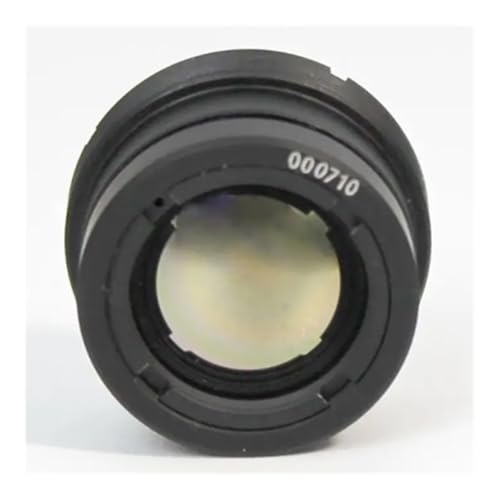
Best for: Drone operators needing thermal monitoring
This long thermal imaging camera is a drone-mounted component for aerial temperature monitoring. It is priced at $433.71 and is designed to fit drone systems with thermal imaging setups. The listing does not provide sensor resolution, detection distance, field of view, or supported drone models. Buyers should confirm those details before ordering, especially for a custom aircraft or replacement build.
The main advantage is its purpose-built format. Standard mounting points should make attachment more straightforward than adapting a general-purpose camera, while the compact housing helps limit the space taken up on a drone. Its long-detection function may suit inspections, surveying, and other tasks that require temperature readings from the air. Still, the product description gives no housing material, weight, power requirements, connector type, or weather rating. Those missing specifications matter because payload limits and electrical compatibility vary between drones.
Pros
- Designed for drone thermal imaging systems, reducing the need for a separate aerial camera setup.
- Standard mounting points can simplify installation on compatible aircraft.
- Compact housing is better suited to limited drone payload space.
Cons
- The listing does not state sensor resolution, detection distance, or temperature accuracy.
- Compatibility remains broad, with no specific drone models, mounting dimensions, or included hardware listed.
3. FPV Thermal Imaging Camera Module, 256×192, 9mm CVBS

Best for: FPV pilots needing thermal vision
This thermal imaging module adds heat-sensing video to an FPV drone without the size of a full camera system. The listed version uses a 256×192 thermal sensor, a 9mm lens, and a CVBS video output. It costs $188.51. CVBS is a common analog connection, so the module should fit setups built around compatible FPV transmitters and monitors. However, the listing does not provide connector dimensions, power requirements, or mounting details. Buyers should confirm those points before ordering.
The 9mm lens offers a middle ground between a wider view and longer detection range, though the listing does not state the exact field of view or detection distance. Its small, lightweight format can help limit changes to drone balance and flight behavior. The camera is aimed at nighttime observation, search work, and infrastructure checks where heat differences matter more than normal color detail. Resolution choices of 256, 384, and 640 are mentioned, but the selected product is specifically the 256×192 CVBS model. That distinction matters if fine thermal detail is a priority.
Pros
- 256×192 thermal imaging can reveal heat differences in dark conditions.
- The 9mm lens balances viewing width with detection range.
- CVBS output supports compatible FPV transmitters and displays.
Cons
- The listing omits power requirements, connectors, and mounting specifications.
- The selected 256×192 version may show less thermal detail than 384 or 640 models.
2. Drone Thermography: The Field Guide

Best for: Drone operators building inspection services
Drone Thermography: The Field Guide To Successs is a $24.99 guide focused on thermal drone inspections. Its stated scope covers three stages: capturing thermal images, diagnosing what those images may show, and delivering useful inspection findings. That makes it more specialized than a general drone photography book.
The clearest strength is its workflow-based focus. It connects flight data with interpretation and client reporting, rather than treating thermal imaging as simple photography. The title also points toward practical inspection work, such as turning aerial heat patterns into findings a customer can act on. Still, the available product information lists no page count, format, sample chapters, included visuals, or technical requirements. Buyers cannot judge the book’s depth from the listing alone.
Pros
- Covers image capture, thermal diagnosis, and inspection delivery in one guide.
- Focuses on drone thermography instead of general aerial photography.
- May help operators connect thermal observations with client-ready findings.
Cons
- No page count, format, sample content, or detailed feature information is provided.
- Its narrow focus may not suit buyers seeking broad drone flight training or general thermography instruction.
1. Autel Robotics EVO II Dual 640T V3 Thermal Imaging Drone

Best for: Professional thermal inspection teams
The Autel Robotics EVO II Dual 640T V3 is a commercial drone built for inspections, emergency response, surveying, and security work. Its thermal camera records at 640×512 and 30 frames per second through a 13mm lens. It also offers 16x digital zoom and subject recognition claims up to 100 meters. Remote ID is included.
The visible camera uses a 0.8-inch CMOS sensor with 50 megapixels, 4x lossless zoom, and 16x digital zoom. Thermal tools include 10 palettes, spot and area temperature readings, alarms, isotherms, and picture-in-picture viewing. Nineteen sensor groups, including 12 visual sensors, support obstacle awareness and mapping. The aircraft is rated for up to 38 minutes per flight, while SkyLink 2.0 lists video transmission up to 15 kilometers with 2.4GHz, 5.8GHz, and 900MHz bands. At $4,099, this is specialized equipment, not a casual camera drone.
Pros
- High-resolution 640×512 thermal imaging captures more heat detail than lower-resolution sensors.
- The 50MP visible camera adds useful detail for documenting cracks, equipment, roofs, and other targets.
- The bundle includes three batteries, a Smart Controller V3, chargers, spare propellers, and protective cases.
Cons
- The $4,099 price limits this aircraft to professional users with a clear inspection or response need.
- The 38-minute flight rating can drop with wind, cold weather, payload use, and aggressive flying. The 15-kilometer transmission figure also depends on local rules, interference, and line-of-sight conditions.
Buying Guide
Thermal sensor resolution matters most because it affects whether you can identify an animal at distance. Choose at least 640 × 512 pixels and a NETD of 40 mK or lower for clearer images in cool conditions.
- Sensor and lens: Select a 640 × 512 sensor with a 13 mm to 25 mm lens. Wider lenses cover more ground, while longer lenses show more detail at distance.
- Flight time: Look for 30 to 45 minutes per battery. Plan for two or three batteries, since wind, cold, and repeated takeoffs reduce usable time.
- Detection range: Compare rated detection and identification ranges. A useful model should detect a deer beyond 1,000 yards, but confirm real performance through sample footage.
- Weather protection: Choose a drone with at least an IP54 rating and an operating range near 14°F to 104°F. Cold-weather battery performance can drop sharply.
- Controls, laws, and cost: Budget roughly $3,000 to $10,000 for a capable thermal aircraft. Check local hunting, wildlife, airspace, and nighttime-use rules before purchase.
If you cannot have everything, prioritize sensor resolution and NETD, since poor thermal detail limits every other feature.
Frequently Asked Questions
How do thermal drones help hunters locate animals?
Thermal drones help hunters locate warm-bodied animals by detecting heat differences through darkness, light brush, and low visibility. A display with a 640×512 sensor may show more detail than a lower-resolution model, but range still depends on weather, terrain, and tree cover.
What should I look for in a thermal hunting drone?
Look for a radiometric thermal camera, stable flight controls, a return-to-home function, and a battery that supports your planned search time. For example, a drone rated for 30-minute flights gives less usable time after wind, cold, takeoff, and the return trip.
Can thermal drones find downed game at night?
Yes, a thermal drone can help find downed game at night, but vegetation, terrain, and body temperature can reduce detection. A clear heat signature is easier to spot in an open field than beneath dense canopy, so scan from several angles instead of relying on one pass.
Are thermal drones legal for hunting?
Thermal drones are not universally legal for hunting, because rules vary by state, species, season, and whether the aircraft assists pursuit. Before flying, check four items: local wildlife regulations, drone airspace, landowner permission, and any night-flight limits for your exact location.
Conclusion
The Autel Robotics EVO II Dual 640T V3 Thermal Imaging Drone remains the top pick for hunters who want a capable thermal platform for locating animals across larger areas and reviewing heat signatures from above. If your priority is a lighter setup, a lower price, or a different flight system, choose an alternative that matches your expected range, control needs, and budget instead. Before buying, double-check the drone’s folded and flight size, compatibility with your phone, controller, batteries, and local rules, the quantity of spare batteries or included accessories, and the current price. Thermal drones can vary widely in weight, included gear, software support, and operating costs, so match the package to your actual hunting trips rather than choosing by sensor resolution alone.
