
5 Best Binoculars for Coastal Viewing for Birders
The TRV 10×42 Binoculars are the best binoculars for coastal viewing for most buyers because their 10x magnification and 42mm objective lenses balance distant detail with a manageable size. That combination suits birdwatching, boat spotting, and scanning rocky shorelines without requiring a heavier, more specialized optic.
This guide is for travelers, birdwatchers, boat watchers, and families spending time near the water. For this type of optic, magnification, lens size, weight, and water resistance matter most. Higher magnification can reveal more detail, but it also makes hand shake easier to notice. Weather sealing helps protect against sea spray and sudden rain. The 5 picks below are ranked with reasons and honest drawbacks for each, so you can choose a pair that fits your coastline trips and budget.
Quick Comparison
| # | Product | Best For | Price | |
|---|---|---|---|---|
| 1 | TRV 10×42 Binoculars | Wildlife Viewing From Long Distances | $59.99 | View → |
| 2 | Adorrgon 12×42 Binoculars | Birdwatchers Needing Extra Magnification | $49.86 | View → |
| 3 | Aurosports 12×32 Compact Binoculars | Travelers Wanting Lightweight Optics | $37.99 | View → |
| 4 | Binoculars with Phone Adapter | Smartphone-Friendly Outdoor Observers | $35.85 | View → |
| 5 | 12×32 Compact Binoculars | Compact Everyday Nature Viewing | $39.99 | View → |
Our 5 Top Binoculars for Coastal Views
The list is ranked by clarity, weather protection, and comfort, counting down to the top pick.
5. 12×32 Compact Binoculars

Best for: Cruise travelers and bird watchers
These compact binoculars provide 12x magnification through 32mm objective lenses, a larger setup than many 12×25 models. The 20mm eyepieces can make the viewing area feel less cramped, while the lightweight body weighs 343g, or about 12 ounces. That balance suits travel, sports stands, sightseeing, and outdoor events where a full-size pair feels inconvenient.
The optical system uses BAK4 roof prisms and fully multi-coated lenses. Those parts are designed to improve light transmission and color clarity in shaded woods, early mornings, and late afternoons. Twist-up eyecups and generous eye relief also accommodate many eyeglass wearers. Rubber armor adds grip and helps protect the housing from bumps. The product is described as waterproof and fog-resistant, though no formal water-resistance rating appears in the supplied details. At $39.99, it offers a useful mix of reach, portability, and basic outdoor protection.
Pros
- 32mm objective lenses gather more light than common 25mm compact models.
- BAK4 prisms and fully multi-coated lenses support brighter, sharper views.
- Twist-up eyecups and generous eye relief suit users who wear glasses.
Cons
- 12x magnification can make distant subjects harder to hold steady without support.
- No IP or immersion rating is listed, so the waterproof claim lacks a clear protection level.
4. Binoculars with Phone Adapter

Best for: Cruise and birdwatching views
These 15×55 binoculars are designed for long-distance viewing during birdwatching, cruises, sports, and travel. Their fixed 15x magnification brings distant subjects closer, while the 55mm objective lenses collect more light than compact binoculars. The listed field of view reaches 367 feet at 1,000 yards, with an 8-degree wide-angle design. There is no zoom function, so users cannot quickly switch to a wider view.
The optical system combines BAK4 prisms with fully multi-coated glass for brighter images and improved color. Argon purging, fog resistance, and an IPX7 waterproof rating make them suitable for changing outdoor conditions. Rubber armor adds grip and helps protect the housing from bumps. Twist-up eyecups provide 13.6 to 19.6mm of eye relief, which can accommodate many glasses wearers. The included phone adapter adds a practical way to capture photos or video, although alignment may require patience. At $35.85, these offer a broad feature set for casual outdoor viewing.
Pros
- 55mm lenses and BAK4 prisms can provide brighter views in lower light.
- IPX7 waterproofing, fog resistance, and rubber armor suit outdoor use.
- Adjustable eye relief and a phone adapter improve viewing flexibility.
Cons
- Fixed 15x magnification makes close subjects harder to frame quickly.
- High magnification can produce shaky views without a tripod or steady support.
3. Aurosports 12×32 Compact Binoculars

Best for: Compact travel and birdwatching use
The Aurosports 12×32 binoculars are small, lightweight optics for birdwatching, hiking, cruises, travel, and casual outdoor viewing. Their 12x magnification brings distant subjects closer, while the 32mm objective lenses provide a listed field of view of 273 feet at 1,000 yards. The compact PVC-free construction should fit in a pocket or daypack.
The optical package includes BAK4 prisms and fully multi-coated lenses on every objective and eyepiece surface. Aurosports rates the design for 99% light transmission, which may help produce brighter views and more accurate color in suitable conditions. A center focus wheel handles sharpness, and rotating eyecups can adjust for users with or without glasses. The strongest feature is the balance between high magnification and a travel-friendly size. However, 12x power can make hand movement more noticeable than it would be with lower magnification. These binoculars also need dry storage, and the product details do not identify them as waterproof.
Pros
- The 12x magnification helps users inspect distant birds, scenery, and ship views.
- Fully multi-coated lenses and BAK4 prisms support brighter, sharper images.
- Rotating eyecups and a central focus wheel suit glasses wearers and quick viewing.
Cons
- Twelve-power magnification can produce a shakier view without steady hands or support.
- The 32mm lenses collect less light than larger binoculars, especially near dusk.
2. Adorrgon 12×42 Binoculars
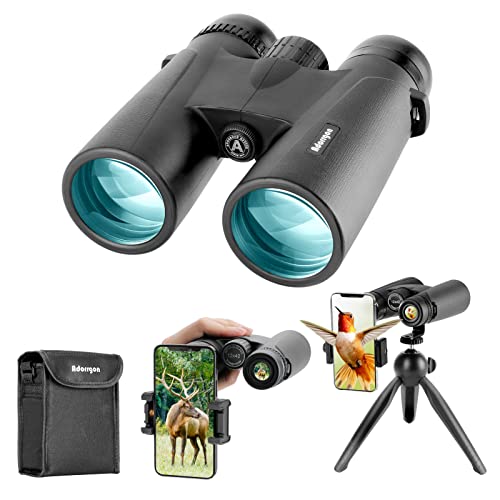
Best for: Casual birdwatching and travel
The Adorrgon 12×42 binoculars pair 12x magnification with 42mm objective lenses. That combination brings distant birds, wildlife, sports, and scenery closer while keeping the body reasonably portable. The listed field of view is 367 feet at 1,000 yards, which can help locate moving subjects. At $49.86, this is an affordable observation kit rather than a specialized optic.
Several details add value for outdoor use. The binoculars use BAK4 prisms, fully multi-coated lenses, and large 18.5mm eyepieces for a brighter, more comfortable view in daylight and changing light. A center focus wheel and right-eye diopter help balance the image between both eyes. The package also includes a smartphone adapter and compact rotating tripod for hands-free viewing or recording. Rubber armor improves grip, while the advertised waterproof build adds protection during changing weather.
Pros
- 12x magnification and 42mm lenses suit wildlife, sightseeing, and sporting events.
- BAK4 prisms, fully multi-coated optics, and 18.5mm eyepieces support clearer, more comfortable viewing.
- Included phone adapter and rotating tripod add photo and hands-free viewing options.
Cons
- The 12x power can make hand shake more noticeable, especially during extended viewing.
- Smartphone results depend on phone fit and careful eyepiece alignment, and the compact tripod may not provide the same stability as a full-size model.
1. TRV 10×42 Binoculars

Best for: Boat trips and wildlife viewing
The TRV 10×42 binoculars are designed for travel, birding, boating, sports, and general outdoor viewing. They pair 10x magnification with 42mm objective lenses, BAK4 prisms, and fully multi-coated optics. At $59.99, they offer a practical set of features for buyers who want more reach than compact travel binoculars.
The 728g body uses balanced weight distribution to reduce some handheld movement, while the rubber armor adds grip and protection against everyday bumps. Their 331-foot field of view at 1,000 yards can help you find moving birds, boats, or players more easily. O-ring seals and nitrogen purging help resist water, dust, and internal fogging. Still, IPX5 protection covers water exposure, not full submersion. The 10x power may also show hand shake during long viewing sessions, especially without a steady support.
Pros
- 10×42 optics provide useful reach for wildlife, landscapes, and sporting events.
- A 331-foot field of view at 1,000 yards makes moving subjects easier to track.
- Rubber armor, O-ring sealing, and nitrogen purging support outdoor use in damp weather.
Cons
- The 728g weight is heavier than many compact binoculars for travel.
- IPX5 water resistance does not protect against submersion, and 10x magnification can be difficult to hold steady.
Buying Guide
The most important factor is waterproof, fogproof construction because salt spray and sudden rain can ruin ordinary optics. Choose a sealed, nitrogen-purged pair rated IPX7, then rinse the exterior with fresh water after shore use.
- Magnification and stability: Choose 7x or 8x magnification for boats, seabirds, and distant landmarks. Higher power, such as 10x, shakes more and needs steadier hands or a tripod adapter.
- Objective lens size: A 42mm objective lens offers a useful balance of brightness, reach, and carrying weight. Compact 25mm or 32mm lenses weigh less but look dimmer near sunset.
- Field of view: Look for at least 6 degrees, or about 315 feet at 1,000 yards. A wide view helps track moving birds and scan a busy horizon.
- Eye relief and controls: Aim for 15mm or more of eye relief, especially with glasses. Large focus wheels and textured rubber armor are easier to operate with cold or wet hands.
- Weight and price: Keep the pair under 28 ounces for long walks. Expect to spend about $100 to $250 for dependable marine-ready optics, while premium glass often costs more.
If you must compromise, prioritize sealed waterproof construction, since repairs or replacement cost more than modest optical upgrades.
Frequently Asked Questions
How do I choose binoculars for coastal viewing?
Choose binoculars with 7x or 8x magnification, a 32mm to 42mm objective lens, and waterproof, fog-resistant construction. An 8×42 model offers a steady image and gathers enough light for dawn, dusk, and cloudy skies. Look for rubber armor, a wide field of view, and a comfortable focus wheel for tracking birds or boats.
What magnification is best for watching the coast?
An 8x pair is the best all-around choice for coastal viewing because it balances reach with a steady handheld image. Seven-power models work well from moving boats or exposed cliffs, while 10x optics show more distant details but amplify hand shake. A 42mm objective lens also helps in dim morning or evening light.
Can binoculars used near the ocean resist saltwater?
Yes, ocean-use binoculars can resist saltwater if they are waterproof, sealed, and fog-proof, but no model should be left wet or crusted with salt. Choose a rating such as IPX7, then rinse the exterior with fresh water and dry it after spray exposure. Avoid opening the body, where moisture can damage internal optics.
Are compact binoculars good for shoreline wildlife?
Compact binoculars are good for casual shoreline wildlife viewing, but full-size 8×42 models usually provide brighter images and easier viewing. An 8×25 or 8×32 pair weighs less and fits a day pack, yet its smaller lenses perform less well at dawn, dusk, or under heavy cloud. Choose compact optics for daylight portability.
Conclusion
The TRV 10×42 Binoculars remain the top pick for shore watchers who want strong reach and a brighter view for distant boats, birds, and cliffs. If your priority is easy packing over maximum reach, choose a compact 8×32 pair instead, since its smaller body usually weighs less and takes up less room in a day bag. Before buying, double-check the binoculars’ size, compatibility with any phone adapter or tripod, quantity in the package, and current price, since listings can change. For saltwater trips, rinse the exterior with fresh water, dry the lenses with a clean cloth, and store the case closed after each outing. That routine helps protect your view.
