5 Best Drone for Windy Conditions on a Budget
For most buyers, the DJI Mini 3 Camera Drone is the best drone for windy conditions because its rated wind resistance gives a small camera drone more control in gusts. Its main advantage is the balance of a 10.7-meter-per-second wind rating, a stabilized three-axis gimbal, and 4K video in a body under 249 grams. That compact size makes it easy to carry, but strong coastal gusts still call for caution and extra flying space.
This guide is for travelers, casual pilots, and creators who want aerial footage without carrying a large aircraft. Wind rating and battery life matter most, since gusts can drain power and make positioning harder. The five picks below are ranked with clear reasons and honest drawbacks for each, covering portable models, longer-flight options, and sturdier designs for exposed locations.
Quick Comparison
| # | Product | Best For | Price | |
|---|---|---|---|---|
| 1 | DJI Mini 3 Camera Drone | Travel Photographers Wanting Lightweight Gear | $505.99 | View → |
| 2 | DJI Mini 4K Camera Drone | Budget-Conscious 4K Beginners | $269.00 | View → |
| 3 | Ruko F11PRO 2 Plus Drone | Long-Flight Outdoor Hobbyists | $499.99 | View → |
| 4 | Bwine F7GB2 Pro Camera Drone | Aerial Video Content Creators | $469.99 | View → |
| 5 | GPS Drone with 4K Camera | GPS-Assisted Return-to-Home Flyers | $161.99 | View → |
5 Top Drones for Windy Flights
These five drones are ranked from capable wind-ready options down to the top pick for gusty conditions.
5. GPS Drone with 4K Camera

Best for: Travelers learning aerial photography
At $161.99, this foldable GPS quadcopter targets beginners who want more than a basic toy. It weighs under 249 grams and includes a 4.5-inch controller screen, so you can view the live feed without a phone or companion app. The controller also avoids interruptions from calls and notifications. A 4K camera with a 90-degree adjustable lens handles forward-looking shots and angle changes from the air.
The package includes two 7.4-volt, 1600mAh batteries, with a claimed combined flight time of about 60 minutes. A 4GB SD card provides in-box storage. GPS supports one-button, low-battery, and signal-loss return modes, while optical-flow positioning is intended for indoor hovering. Brushless motors should offer lower noise and longer service life than brushed designs. Beginner-friendly controls include one-key takeoff and landing, three speed settings, headless mode, waypoints, tap-to-fly, and gesture photos. The main catch is that advertised flight time varies with wind, speed, and camera use.
Pros
- Built-in screen lets you fly without a smartphone.
- GPS return modes can reduce the chance of losing the aircraft outdoors.
- Two included batteries provide more flight time between charging sessions.
Cons
- The 4.5-inch display is smaller than most phones, which may make framing details harder.
- “60 minutes” is a combined estimate, not 60 minutes from one battery. Actual time will depend on conditions.
4. Bwine F7GB2 Pro Camera Drone

Best for: Adult aerial photographers seeking stable footage
The Bwine F7GB2 Pro is a GPS camera drone priced at $469.99. Its detachable 4K camera uses a 120-degree field of view, a larger CMOS sensor, and a three-axis gimbal. That setup should help reduce camera movement during turns and directional changes. A 5x digital zoom adds framing flexibility, though digital zoom can reduce detail at higher magnification.
Flight time comes from three 11.1V, 2600mAh batteries, with a claimed total of 75 minutes per trip. The package also includes a transmitter, carrying case, two USB cables, spare propeller blades, and screws. GPS supports low-battery return, signal-loss return, one-key return, follow mode, waypoint paths, and circle flights. The drone lists a 3,000-meter control range and operation at peaks up to 2,000 meters, but local flight rules, terrain, and weather can reduce those figures. FAA Remote ID certification is listed, with the identification code and QR code placed on the drone arm. The app supports social sharing, six filters, and 10 music tracks. A 65W fast charger is optional.
Pros
- Three batteries provide a claimed 75 minutes of combined flight time.
- The 4K camera pairs with a three-axis gimbal for steadier footage.
- GPS return features can help recover the drone after low battery or signal loss.
Cons
- The advertised range and altitude depend on conditions and local regulations.
- The optional 65W charger adds cost, while the included USB cables may charge more slowly.
3. Ruko F11PRO 2 Plus Drone

Best for: Long-range aerial photography enthusiasts
The Ruko F11PRO 2 Plus is a GPS camera drone priced at $499.99. Its 48MP camera uses a 1/2-inch CMOS sensor and records 4K video at 30 frames per second. It also captures 8K still photos, giving users plenty of resolution for cropping and large prints. A three-axis mechanical brushless gimbal should help keep footage level during movement, while GPS supports one-key return and automatic return home after signal loss or low battery.
Two intelligent batteries provide a claimed 74 minutes total, or 37 minutes each, though flight conditions affect actual time. The listed 20,000-foot transmission range suits broad properties and distant landscapes, but local rules and terrain may limit practical distance. Low-light shooting is a central selling point, and OTA updates can add software improvements through the app. Ruko includes 30-day returns or exchanges, 90-day coverage, and ongoing support, useful for a costly drone.
Pros
- The 48MP sensor captures high-resolution 8K photos and 4K video at 30fps.
- Two batteries provide up to 74 minutes of combined flight time.
- A three-axis mechanical gimbal helps reduce shake and tilted footage.
Cons
- At $499.99, this drone costs more than many entry-level camera drones.
- The 20,000-foot range is a stated maximum, not a guarantee in areas with interference, obstacles, or flight restrictions.
2. DJI Mini 4K Camera Drone
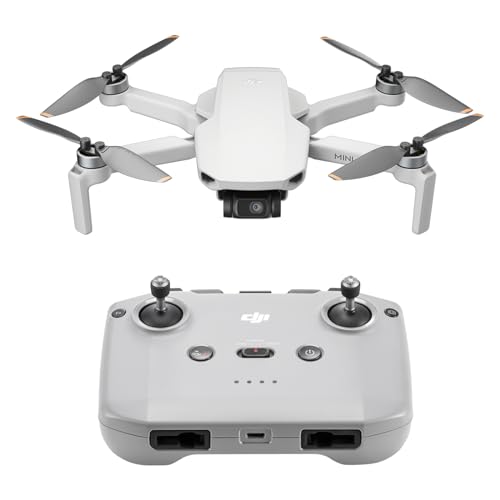
Best for: First-time aerial video creators
The DJI Mini 4K is a lightweight camera drone priced at $269. Its takeoff weight stays under 249 g, which can simplify recreational flying in the United States. FAA rules still depend on how and where you fly, so check current requirements before launch. The included RC-N1C controller and one battery provide a ready-to-fly setup.
Its 4K camera uses a three-axis gimbal to reduce shaky footage during movement. DJI rates the drone for winds up to 38 kph and takeoffs at elevations as high as 4,000 meters. Battery options range from 31 minutes with one battery to 93 minutes with three, though real flight time can vary. GPS Return to Home, hovering, and one-tap takeoff and landing help new pilots. QuickShot modes such as Circle, Rocket, and Helix create preset movements with a few taps. Android users must download DJI Fly from DJI’s website because the app is not available through Google Play.
Pros
- Under-249-g design may avoid FAA registration and Remote ID for some recreational flights.
- The three-axis gimbal produces steadier 4K footage than a fixed camera.
- GPS Return to Home and automatic hovering reduce the learning curve.
Cons
- The base package includes only one battery, with 31 minutes of claimed flight time.
- DJI Fly requires a website download on Android, which adds setup steps and requires extra care with app installation.
1. DJI Mini 3 Camera Drone

Best for: Recreational travel and landscape filming
The DJI Mini 3 is a compact camera drone priced at $505.99 with the DJI RC controller. Its under-249-gram aircraft can avoid FAA registration and Remote ID requirements for recreational flights, subject to current rules. The included RC has a built-in 5.5-inch HD screen, so you can fly without mounting a phone. Its display is designed to remain visible in direct sunlight.
A 4K HDR camera records aerial footage through a three-axis mechanical gimbal, which helps keep video steady during flight. True vertical shooting suits waterfalls, towers, and social media posts. Dual Native ISO Fusion helps preserve detail in bright and dark areas, including at night. The drone resists Level 5 winds up to 38 kph and can operate at altitudes up to 4,000 meters. DJI rates HD transmission at up to 10 kilometers, though local regulations, buildings, trees, and interference can reduce that distance. QuickShots, Panorama, GPS Return to Home, hovering, and automatic takeoff and landing support newer pilots. Flight time reaches 51 minutes with the optional Intelligent Flight Battery Plus, but that battery pushes the aircraft above 249 grams. The Fly More combo offers up to 114 minutes total.
Pros
- Included DJI RC provides a dedicated 5.5-inch HD display.
- Vertical capture and 4K HDR suit travel and social video.
- GPS safety tools simplify takeoff, landing, and recovery.
Cons
- The 51-minute Plus battery costs extra and removes the under-249-gram advantage.
- Claimed 10-kilometer transmission distance may be much shorter around obstacles or interference.
Buying Guide
Wind resistance is the most important factor because a drone can lose position, battery power, or video quality in strong gusts. Look for a manufacturer rating of Level 5, roughly 19 to 24 mph, for dependable outdoor control.
- Wind-resistance rating: Choose a model rated for at least 10 m/s, or 22 mph. Treat lower ratings as suitable only for calm parks and light breezes.
- Weight and size: A drone weighing 1.5 to 3 pounds usually handles gusts better than ultra-light models under 250 grams. Check local registration rules before buying.
- Positioning system: Require GPS or another satellite system, plus optical sensors. The drone should hold its position within about 1 to 3 feet in normal conditions.
- Battery capacity: Choose at least 25 minutes of stated flight time and buy two or three spare batteries. Wind can reduce real flight time by 20% or more.
- Camera stabilization: A three-axis mechanical gimbal keeps footage steadier than electronic stabilization alone. Look for 4K video at 30 frames per second if you plan to edit clips.
If you cannot get every feature, prioritize the highest wind-resistance rating from a reputable manufacturer.
Frequently Asked Questions
How much wind can a camera drone handle safely?
A camera drone can handle wind safely only within its manufacturer-rated limit, including gusts. Check the manual before takeoff, since a forecast showing 15 mph can still hide stronger gusts near buildings, trees, or ridgelines. Choose a model with a published wind-resistance rating rather than relying on weight alone.
What features help drones fly in strong wind?
The most useful features for windy flights are a heavier airframe, strong motors, GPS positioning, and reliable control links. Look for a published wind rating, not just a large battery or high top speed. Three-axis stabilization helps keep footage level, but it cannot prevent a small aircraft from drifting when gusts exceed its limit.
Can small drones fly in windy weather?
Small drones can fly in light wind, but they usually lose position and battery life faster than heavier models. A 250-gram class aircraft may be easier to carry, yet its lower mass gives gusts more influence. Fly close to your launch point and land when control response becomes inconsistent.
Are heavier drones always better for windy conditions?
Heavier drones are usually more stable in wind, but they are not always the better choice. A sub-250-gram model may face different rules in some countries, while a larger aircraft can cost more to transport and operate. Compare its rated wind resistance, battery endurance, control range, and local requirements before buying.
Conclusion
The DJI Mini 3 Camera Drone is the top pick for travelers and casual pilots who want a compact camera drone with useful wind resistance. If longer flight time or stronger stability matters more than low weight, choose a larger model with a heavier airframe and a higher wind-resistance rating instead. Before buying, double-check the drone’s folded size, phone or controller compatibility, what the package includes, battery quantity, and the current price. No small quadcopter should be treated as storm-ready, so check local rules, keep a clear landing area, and avoid gusts that exceed the manufacturer’s stated limits. That approach protects the camera, reduces lost-drone risk, and leaves room for safer future flights.