
5 Best Headphones for Sensitive Ears for Long Listening
For most buyers, the Soundcore by Anker Q20i Noise Cancelling Headphones are the best headphones for sensitive ears because their soft memory-foam earcups help reduce pressure during longer listening sessions. They are over-ear wireless headphones with hybrid active noise cancellation, a useful fit for people who find hard pads, tight clamping, or outside noise uncomfortable.
This guide is for listeners who get soreness, heat, or fatigue from ordinary headphones. The key factors are gentle earcup pressure, breathable padding, and battery life, since comfort can change after an hour rather than five minutes. The five picks below are ranked with clear reasons and honest drawbacks for each, including fit differences, noise-control limits, and features that may not suit every listener.
Quick Comparison
| # | Product | Best For | Price | |
|---|---|---|---|---|
| 1 | Soundcore by Anker Q20i Noise Cancelling Headphones | Long Commutes on a Budget | $39.97 | View → |
| 2 | Apple AirPods Pro 3 Wireless Earbuds | iPhone Users Wanting Compact Earbuds | $199.00 | View → |
| 3 | Sony WH-CH520 Wireless On-Ear Headphones | Casual Listeners Seeking Lightweight Comfort | $38.00 | View → |
| 4 | Soundcore V20i Open Ear True Wireless Earbuds | Runners Needing Open-Ear Awareness | $29.99 | View → |
| 5 | Beats Studio Pro Wireless Over-Ear Headphones | Bass Fans Wanting Premium Headphones | $249.95 | View → |
5 Comfortable Headphones for Sensitive Ears
The list is ranked by comfort, fit, and pressure, counting down from fifth place to the top pick.
5. Beats Studio Pro Wireless Over-Ear Headphones

Best for: Frequent travelers and daily commuters
The Beats Studio Pro are over-ear wireless headphones priced at $249.95. They use Bluetooth Class 1 for stable connections and support one-touch pairing with Apple and Android devices. Battery life reaches up to 40 hours, while a 10-minute Fast Fuel charge provides up to 4 hours of playback. The package includes a woven carrying case, 3.5 mm audio cable, USB-C charging cable, and warranty card.
Active noise cancelling helps reduce sounds on planes, trains, and busy streets. Transparency mode lets outside audio mix with your music when you need awareness. USB-C lossless audio offers a wired digital option, while the 3.5 mm cable supports standard analog listening. Personalized spatial audio with dynamic head tracking can create a 360-degree effect for supported movies and music. UltraPlush ear cushions should suit long sessions, though fit and heat will vary by person. Voice-targeting microphones aim to keep calls clear around background noise.
Pros
- Up to 40 hours of battery life reduces charging during workweeks and trips.
- USB-C lossless audio and a 3.5 mm cable support both digital and analog listening.
- ANC, Transparency mode, and spatial audio cover commuting, travel, and movie watching.
Cons
- Lossless listening requires a USB-C connection, so it is not available over Bluetooth.
- Over-ear cushions can feel warm during long sessions, especially in hot weather.
4. Soundcore V20i Open Ear True Wireless Earbuds

Best for: Commuters needing open-ear comfort
The Soundcore V20i by Anker are true wireless earbuds that rest outside the ear canal instead of sealing inside it. That design can feel less intrusive during long listening sessions and lets surrounding sounds remain audible. Four adjustable positions help you rotate each earpiece for a steadier fit, which suits walking, commuting, and office use. At $29.99, they target buyers who want an open-ear setup without spending much.
Sound comes from 16mm drivers with titanium-coated domes and Soundcore’s BassUp processing. That is a larger driver size than many compact earbuds, though open-ear designs usually cannot create the same sealed, low-end impact as in-ear models. Four microphones and an AI voice algorithm support clearer calls in changing surroundings. The built-in lights can sync with music and use custom colors, but they add a style feature rather than improving audio quality. The open design also leaves you aware of traffic, coworkers, and other nearby sounds.
Pros
- Open-ear construction avoids the plugged-in feeling of sealed earbuds.
- Four position settings help fine-tune comfort and stability.
- Four microphones and AI processing support clearer voice calls.
Cons
- Open earbuds provide little isolation in loud buses, gyms, or busy streets.
- Bass and detail may sound less forceful than with sealed in-ear headphones.
3. Sony WH-CH520 Wireless On-Ear Headphones

Best for: Commuters wanting long battery life
The Sony WH-CH520 is a lightweight, on-ear Bluetooth headset priced at $38. Its adjustable headband, padded earcups, and swivel design make it easy to put on, remove, and pack for travel. The built-in microphone supports hands-free calls, while Multipoint Bluetooth lets you connect two devices and switch between them. A USB-C cable is included for charging.
Battery life reaches up to 50 hours, which suits long trips and several days between charges. Quick charging adds convenience when time is short. Sound can be adjusted in the Sony Headphones Connect app, including a custom EQ for different music preferences. Sony’s DSEE processing also aims to improve the sound of compressed music files. Fast Pair can help locate the headphones through Google’s Find My Device app, and Swift Pair simplifies setup with Windows 10 PCs. Cappuccino is one of six available colors.
Pros
- Up to 50 hours of battery life supports extended travel and daily listening.
- Multipoint Bluetooth connects two devices for easier switching.
- Custom EQ in the Sony app lets you adjust the sound profile.
Cons
- On-ear earcups provide less passive noise blocking than closed-back over-ear headphones.
- No active noise cancellation is listed, so outside sounds may remain noticeable.
2. Apple AirPods Pro 3 Wireless Earbuds
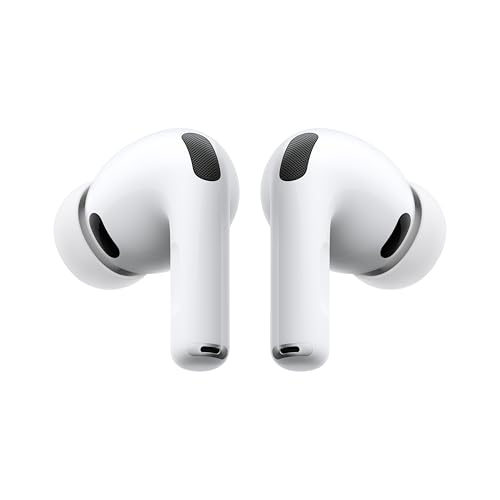
Best for: iPhone users who exercise and travel
The Apple AirPods Pro 3 are wireless, in-ear earbuds with active noise cancellation, heart-rate sensing, and hearing-health tools. At $199, they target buyers who want more than music playback. Apple says the noise cancellation removes up to twice as much unwanted sound as AirPods Pro 2. A redesigned acoustic system also aims to deliver stronger bass, clearer instruments, and more detailed vocals.
The feature set is unusually broad. Built-in sensors can track heart rate and calories across up to 50 workout types. Battery life reaches up to 8 hours with noise cancellation enabled, or up to 10 hours in Transparency mode when using the Hearing Aid feature. Five ear-tip sizes should make it easier to find a stable seal. Hearing tests, automatic Conversation Boost, and active Hearing Protection add useful tools for daily communication. Live Translation and Workout Buddy require Apple Intelligence, while several functions work best with an iPhone and other Apple devices.
Pros
- Up to 8 hours of listening with active noise cancellation.
- Five ear-tip sizes support a more secure in-ear fit.
- Heart-rate sensing covers up to 50 workout types.
Cons
- Several standout features require an iPhone and Apple Intelligence.
- The advertised battery figures are maximum estimates, not guaranteed runtimes.
1. Soundcore by Anker Q20i Noise Cancelling Headphones

Best for: commuters and remote workers
The white Soundcore by Anker Q20i are wireless headphones with hybrid active noise cancellation. Four built-in microphones help reduce surrounding sound in offices, on commutes, and near busy streets. ANC mode supports up to 40 hours of listening per charge. A five-minute recharge adds about four hours, which helps during rushed departures. Bluetooth also supports two connected devices, so you can move between a laptop and phone without manually repairing each time.
Sound is adjustable through the Soundcore app, with EQ presets, custom tuning, ANC, Normal, Transparency, and white-noise options. BassUp adds extra low-end weight in wireless mode, while the included AUX cable enables Hi-Res certified audio. Transparency mode lets outside sounds through for announcements or quick conversations. At $39.97, the feature set is broad for a budget pair, especially for people who need both work calls and casual listening. The main compromise is that several functions depend on the listening mode.
Pros
- Four microphones support hybrid ANC for commutes, offices, and street noise.
- A 40-hour ANC battery and five-minute, four-hour quick charge suit long travel days.
- Two-device Bluetooth pairing, app EQ controls, and Transparency mode add useful daily flexibility.
Cons
- ANC does not work in AUX-in mode, so wired listening cannot use noise cancellation.
- Hi-Res audio requires the included cable, while BassUp is specified for wireless mode, limiting access to both features at once.
Buying Guide
The most important factor is low physical pressure, because tight clamping and hard pad edges can cause pain within an hour. Choose adjustable over-ear models with soft, replaceable cushions, not just strong noise blocking.
- Clamp force: Favor a light, even grip that does not press the temples. If listed, aim for roughly 3 to 5 newtons, or choose a retailer with free returns.
- Earpad design: Pick memory foam or plush fabric pads at least 0.75 inches thick, with openings larger than your ears. Real leather may trap heat.
- Weight: Keep the headband load near 8 to 10 ounces for long listening. A padded, adjustable band also reduces pressure at the crown.
- Sound and volume control: Choose warm or neutral tuning without a sharp treble peak around 3 to 8 kHz. A volume limiter near 85 dB can reduce discomfort from loud playback.
- Noise control and fit: ANC can reduce the need to raise volume, but some listeners notice its low hum. Check for adjustable ANC, transparency mode, and a 30-day return window.
If you cannot get every feature, prioritize low clamp force and roomy, soft pads.
Frequently Asked Questions
How can I choose headphones for sensitive ears?
Choose headphones with soft padding, low clamping force, and adjustable volume controls. Over-ear models with memory-foam cushions usually spread pressure across a larger area than tight on-ear pairs. Look for breathable fabric or perforated leather, especially if you wear them for more than 60 minutes at a time.
What features should I look for in headphones for ear sensitivity?
Look for lightweight construction, replaceable ear pads, gentle headband pressure, and clear sound at low volume. A closed-back design can reduce outside noise without requiring louder playback. Headphones weighing about 200 to 300 grams may feel less tiring during work, travel, or extended listening sessions.
Can noise-canceling headphones help with sensitive ears?
Noise-canceling headphones can help sensitive ears by reducing background noise, but the pressure sensation may bother some listeners. Try a model with adjustable cancellation or an ambient mode. Start with short sessions of 15 to 20 minutes, then stop if you notice discomfort, fullness, or ringing.
Are over-ear headphones better than earbuds for sensitive ears?
Over-ear headphones are often better for sensitive ears because they avoid direct contact with the ear canal. Large cushions can also reduce rubbing and pressure on the outer ear. Earbuds may suit some people, but silicone tips can irritate the canal, especially during listening sessions longer than 30 minutes.
Conclusion
Soundcore by Anker Q20i Noise Cancelling Headphones are the top pick for listeners who want cushioned over-ear comfort, adjustable noise control, and a practical price for daily travel, work, or home use. If your priority is the lightest possible fit rather than strong isolation, pick a smaller on-ear or wired model with soft, replaceable pads and a low-pressure headband, because less clamp may feel better during long listening sessions. Before buying, double-check the earcup size, headband range, device compatibility, included quantity for a bundle or replacement set, and the current price, since listings, discounts, and package contents can change; check return terms if fit remains uncertain.
