
5 Best Endgame Headphones for Critical Listening
The HD 490 PRO Headphones are the top pick for most buyers seeking the best endgame headphones because they pair highly accurate studio sound with a comfortable open-back design. They are built for long listening sessions, critical music work, and everyday use at home, though their open construction lets sound in and out. That makes them a poor choice for travel or shared rooms, but a strong foundation for a long-term headphone setup.
This guide is for listeners who want to make one serious purchase instead of cycling through several upgrades. The main factors here are tuning, wearing comfort, build materials, and whether each model fits quiet-room listening or portable use. Open-back and closed-back designs suit different spaces, so that choice matters as much as price. The five picks below are ranked with clear reasons and honest drawbacks for each, helping you match the right pair to your room, music, and budget.
Quick Comparison
| # | Product | Best For | Price | |
|---|---|---|---|---|
| 1 | HD 490 PRO Headphones | Mixing and music production | $349.00 | View → |
| 2 | ASUS ROG Kithara Open-Back Wired Headphones | Open-back gaming enthusiasts | $225.99 | View → |
| 3 | OneOdio A71 Wired Over-Ear Headphones | Budget studio monitoring | $32.99 | View → |
| 4 | Sony MDR-ZX110 Wired On-Ear Headphones | Portable everyday listening | $9.99 | View → |
| 5 | Ozeino Gaming Headset | Multiplayer voice chat | $21.99 | View → |
5 Endgame Headphones Worth Considering
This ranked list counts down from the fifth choice to the top pick, with sound, comfort, and value guiding each placement.
5. Ozeino Gaming Headset
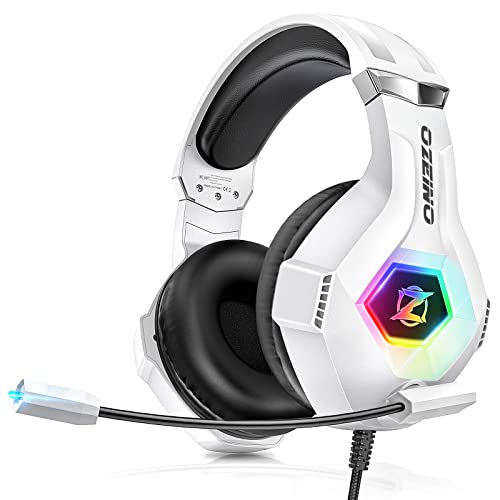
Best for: Budget gamers needing broad compatibility
The Ozeino Gaming Headset is a wired, over-ear model for PC, PlayStation, Xbox, Switch, laptops, and phones with a 3.5mm jack. Its listed 7.1 surround sound aims to separate directional effects, while the audio profile targets crisp treble and stronger bass for shooters, role-playing games, and action titles. The white finish and RGB lighting add a familiar gaming look at a $21.99 price.
The headset uses protein-leather ear cushions and an adjustable headband. Those materials may feel softer than basic foam, though comfort can still vary with head size and long sessions. Its microphone rotates through 360 degrees and uses noise reduction to make team chat clearer in busy game audio. A PC setup needs the included one-to-two 3.5mm splitter, with separate red microphone and green audio plugs. The USB connector powers the lights only, not the sound. Older Xbox One controllers also need a Microsoft adapter, which adds to the setup cost.
Pros
- Works with many devices that provide a 3.5mm audio connection.
- Rotating noise-reduction microphone supports clearer voice chat.
- RGB lighting adds color without using USB for audio.
Cons
- The USB lighting connector does not carry sound or microphone audio.
- PC users need the splitter, and older Xbox One controllers require an extra adapter.
4. Sony MDR-ZX110 Wired On-Ear Headphones

Best for: Budget travel with headphone jacks
At $9.99, the Sony MDR-ZX110 is a basic wired, on-ear headphone set for everyday listening. It uses 1.38-inch neodymium dynamic drivers and a closed-back earcup design. The 3.94-foot cable ends in an L-shaped 3.5mm stereo plug, while the 24-ohm impedance works well with many phones, tablets, laptops, and portable music players.
Its strongest advantage is simple portability. The earcups swivel inward for easier storage in a bag, and the lightweight build avoids adding much bulk during travel. Cushioned earpads sit against the ears, while the closed backs help keep music from spilling out at moderate volume. Sony lists a 12 Hz to 22 kHz frequency range, which covers deep bass through high treble. Expect a lively, rhythmic sound rather than studio-level detail. This is an inexpensive choice for podcasts, playlists, and casual trips, but the fixed cable and basic construction reflect its low price.
Pros
- $9.99 price makes these easy to replace or keep as a spare.
- Swiveling earcups take up less space in a travel bag.
- 1.38-inch drivers and a 12 Hz to 22 kHz range support punchy, full-range playback.
Cons
- The 3.94-foot cable cannot be detached or replaced.
- The 3.5mm plug may require an adapter with phones that lack a headphone jack.
3. OneOdio A71 Wired Over-Ear Headphones

Best for: budget home studio monitoring
The OneOdio A71 is a wired, over-ear headphone set for music playback, DJ work, and basic mixing. Its 40mm drivers support high-resolution audio, giving recordings room for detail across vocals, instruments, and electronic tracks. At $32.99, it targets buyers who want studio-style features without a large upfront cost.
Soft padded ear cushions help block some outside sound, while the adjustable, stretchable headband allows a more personal fit. The included coiled cable extends from 6.6 to 9.8 feet, so it can reach an amplifier, computer, keyboard, guitar, or laptop. Both 3.5mm and 6.35mm plugs are included, so a separate adapter is not needed. Each earcup swivels 90 degrees for single-ear monitoring. A second pair can connect through the shared audio port, which makes group listening easier.
Pros
- 40mm drivers support detailed audio for home recording and DJ sessions.
- The 3.5mm and 6.35mm plugs connect with common music equipment.
- Swiveling earcups allow one-ear monitoring during conversations or cueing.
Cons
- The wired design offers no Bluetooth option, wireless controls, or battery-powered listening.
- The long coiled cable can add weight and clutter during casual portable use.
2. ASUS ROG Kithara Open-Back Wired Headphones

Best for: Desktop listening and competitive gaming
The ASUS ROG Kithara is a wired, open-back headset priced at $225.99. It uses large 100mm planar magnetic drivers tuned with HIFIMAN, a design aimed at detailed music playback and clear game audio. The open earcups create a more spacious presentation than closed headphones, with separation between bass, vocals, and treble. Since the earcups remain open, sound can feel more natural in a quiet room.
Its on-cable MEMS microphone covers 20Hz to 20kHz and is designed for clear voice pickup. The included cable supports several setups, with 4.4mm balanced, 3.5mm, and 6.3mm plugs, plus a USB-C adapter for phones, computers, consoles, DACs, and amplifiers. An eight-level adjustable headband, metal frame, and metal hinges support the premium build. Extra ear pads are included, giving buyers another fit option without requiring a separate purchase.
Pros
- 100mm planar magnetic drivers can deliver detailed audio with low distortion.
- Multiple plug options support balanced audio gear, PCs, consoles, and mobile devices.
- The adjustable headband and extra ear pads allow more fit flexibility.
Cons
- The open-back design leaks sound and lets outside noise in, so it suits quiet rooms best.
- This is a wired headset with no wireless mode or built-in battery for untethered listening.
1. HD 490 PRO Headphones

Best for: Studio producers needing open-back accuracy
The Sennheiser HD 490 PRO is a $349 open-back professional headphone for mixing, editing, and detailed music listening. Its open-frame construction reduces resonance and total harmonic distortion, while the 5–36,000 Hz frequency range targets a neutral response instead of boosted bass or treble. An extremely wide stereo image helps place instruments across a mix with precision.
Two included ear-pad sets suit different production and mixing needs. Swapping them can change the fit and presentation, while washable, replaceable pads can extend the headphone’s useful life. The low-frequency cylinder system is designed to keep bass full and clearly defined. Both ear cups accept the detachable cable, which helps with studio layouts and left-or-right routing. Its coiled cable structure also limits noise from cable movement. FSC-certified packaging uses forest-friendly materials. Still, the open design lets room sound in and music out, so these headphones are a poor choice for tracking near a live microphone or listening in noisy spaces.
Pros
- Open-back imaging helps locate instruments and frequency details accurately.
- Two ear-pad sets give producers different mixing and comfort options.
- Washable, replaceable pads and a detachable cable support longer-term use.
Cons
- Open backs provide no meaningful noise isolation and leak sound.
- The neutral presentation may feel less exciting for bass-heavy casual listening.
Buying Guide
For a flagship headphone, the most important factor is fit, because excellent drivers cannot offset painful clamp or a poor seal. Choose a model you can wear for at least two hours, not one that sounds impressive for ten minutes.
- Fit and comfort: Look for adjustable headbands, replaceable pads, and a total weight below 450 grams. Glasses wearers should favor softer, oval pads with at least 20 mm of interior depth.
- Sound signature: Decide between neutral, warm, bright, or bass-heavy tuning. For mixed music, a neutral or mildly warm model is usually more versatile than one with a strong boost above 8 kHz.
- Amplifier needs: Check impedance and sensitivity before buying. Headphones above 150 ohms, or models below 100 dB sensitivity, may need a dedicated amplifier with at least 2 volts of output.
- Open or closed design: Open-back pairs suit quiet rooms and provide a wider presentation. Closed-back models work better near other people, but can create warmer ear cups during long sessions.
- Ownership cost: Set a realistic budget from $500 to $2,000, then confirm replacement pad prices, cable options, and warranty length. A two-year warranty and pads under $100 reduce long-term expense.
If you cannot have everything, prioritize long-session comfort, since sound quality matters little when the fit forces you to stop listening.
Frequently Asked Questions
How do you choose endgame headphones?
Choose an endgame headphone by matching its sound, comfort, build, and amplifier needs to your listening habits and budget. Compare frequency balance, imaging, clamp force, pad material, repair options, and impedance before buying. Plan to audition at least three models, because personal fit and treble tolerance matter more than price alone.
What makes a pair of headphones endgame quality?
A top-tier headphone earns endgame status through excellent sound, durable construction, long-term comfort, and performance that does not leave you wanting an upgrade. Look for replaceable pads and cables, consistent channel balance, and a warranty of at least two years. Some reference models also need a dedicated amplifier to reach normal listening levels.
Can expensive headphones really be worth the price?
Yes, expensive headphones can be worth it for listeners who value small gains in detail, imaging, comfort, and build quality over many years. A $1,500 model is not automatically better than a $500 one, so compare tuning, fit, return policies, and ownership costs before choosing. Personal preferences often matter more than price.
Are open-back headphones better for endgame listening?
Open-back headphones are usually better for spacious home listening, but closed-back designs suit isolation, shared rooms, and travel. Open models leak sound and offer little noise blocking, while closed versions can sound less airy. For example, neither type is ideal near a sleeping partner or beside an active microphone.
Conclusion
The HD 490 PRO Headphones remain the top recommendation for listeners who want a balanced, detailed pair for mixing, critical listening, and long sessions without moving into boutique pricing. If your priority is a richer, more relaxed sound for casual music enjoyment, choose a warmer closed-back alternative with softer treble, stronger isolation, and easier phone use. Before buying, double-check the headphones’ physical size and clamp, device compatibility, quantity of included pads, cables, and adapters, plus the current price, since package contents, fit, and discounts can change by seller and region. A return window also helps if the fit feels wrong after adjustment.
