
4 Best Laptop for Crafting for Cricut Projects
HP OmniBook 3 Laptop PC is the best laptop for crafting for most buyers, mainly because it offers a practical balance of portability, screen space, and everyday performance. It is a Windows laptop suited to design apps, online patterns, cutting-machine software, and regular home use.
This guide is for crafters who need one computer for creative projects, file storage, video tutorials, and daily tasks. Screen size, battery life, memory, storage, and useful ports matter most when you move between design software, USB tools, and large project files. A lighter model may travel better, while a larger display can make detailed layouts easier to manage. The 4 picks below are ranked with clear reasons and honest drawbacks for each.
Quick Comparison
| # | Product | Best For | Price | |
|---|---|---|---|---|
| 1 | HP OmniBook 3 Laptop PC | Budget Windows productivity users | $459.99 | View → |
| 2 | Apple MacBook Neo 13-inch Laptop | First-time MacBook buyers | $689.99 | View → |
| 3 | HP Everyday Slim Laptop | Basic home and school tasks | $299.99 | View → |
| 4 | Apple MacBook Air M5 13-inch Laptop | Frequent travelers needing speed | $1,297.00 | View → |
4 Top Laptops for Crafting
These four laptops are ranked by crafting-friendly features, screen quality, portability, and value, counting down to the top pick.
4. Apple MacBook Air M5 13-inch Laptop

Best for: college students needing portable power
The 2026 13-inch MacBook Air combines Apple’s M5 chip with 16GB of unified memory and a 512GB SSD. Its 13.6-inch Liquid Retina display supports 1 billion colors, so documents, photos, and videos should look sharp and detailed. At $1,297, it targets buyers who want a lightweight school and work laptop with plenty of storage.
Several features stand out beyond speed. The 12MP Center Stage camera keeps you framed during calls and can provide a top-down Desk View. A three-mic array and four-speaker system support Spatial Audio and Dolby Atmos. Battery life reaches up to 18 hours, according to Apple, which can cover a long class schedule without a charger. Connectivity includes two Thunderbolt 4 ports, MagSafe, a headphone jack, Wi-Fi 7, and Bluetooth 6. It can also run two external displays. Touch ID adds quick login, while macOS and Apple Intelligence support everyday writing, communication, and organization tasks.
Pros
- 16GB unified memory supports heavier multitasking across school and creative apps.
- The 12MP Center Stage camera and Desk View suit online classes and presentations.
- Up to 18 hours of claimed battery life reduces charging during long school days.
Cons
- Two Thunderbolt 4 ports may feel limiting if you connect several accessories.
- The 13.6-inch screen provides less workspace than larger laptops for split-screen tasks.
3. HP Everyday Slim Laptop

Best for: students handling basic schoolwork
The HP New Everyday Slim Laptop is a 14-inch Windows 11 Home computer for browsing, online classes, documents, email, and video streaming. Its Intel N150 processor, Intel graphics, 4GB of DDR5 memory, and 128GB SSD fit basic workloads at a $299.99 price. The solid-state drive should help apps and files open more quickly than older hard-drive systems, but 128GB is modest for a large media collection.
Its 3.24-pound Rose Gold chassis is easy to carry between home, school, and travel. Battery life is rated for up to 11 hours of video playback or 7.5 hours of wireless streaming, though actual time depends on brightness and workload. Wi-Fi 6, Bluetooth 5.4, USB-C, two USB-A ports, HDMI 1.4b, an SD card reader, and a headset jack cover common accessories. The 720p camera includes temporal noise reduction, while dual-array microphones support clearer calls. A full-size keyboard, dedicated Microsoft Copilot key, and multi-touch Imagepad add useful controls.
Pros
- Light 3.24-pound design suits commuting and school bags.
- Wi-Fi 6 and Bluetooth 5.4 provide current wireless connections.
- HDMI, SD, USB-C, and two USB-A ports reduce adapter needs.
Cons
- 4GB of RAM can restrict multitasking with many browser tabs.
- The 128GB SSD leaves limited room for large videos, photos, and games.
2. Apple MacBook Neo 13-inch Laptop

Best for: Students needing an affordable MacBook
The 13-inch MacBook Neo is a compact laptop built around Apple’s A18 Pro chip. This configuration includes 8GB of unified memory and a 256GB SSD, making it suited to schoolwork, web browsing, presentations, video calls, and light gaming. Its Liquid Retina display supports 1 billion colors, while the 1080p FaceTime HD camera improves image quality for online classes and group projects. The recycled aluminum enclosure comes in Blush and includes a color-matched keyboard.
Battery life reaches up to 16 hours, though actual runtime depends on brightness, apps, and wireless use. Apple Intelligence can help summarize notes and rewrite text, but the usefulness of those tools depends on the software and your workflow. Two side-firing speakers and a dual-mic array support calls, music, and streaming. Mac and iPhone features also make file sharing, calls, and device handoffs more convenient. At $689.99, it offers a lower entry price than many Apple laptops, but buyers should keep its base memory and storage limits in mind.
Pros
- A18 Pro processing supports school apps, Apple Intelligence, and Apple Arcade games.
- Up to 16 hours of battery life can cover a full school day.
- The 13-inch display, 1080p camera, and dual microphones suit remote classes.
Cons
- 8GB of unified memory may limit heavier multitasking and demanding creative apps.
- The 256GB SSD can fill quickly with videos, large projects, and downloaded games.
1. HP OmniBook 3 Laptop PC
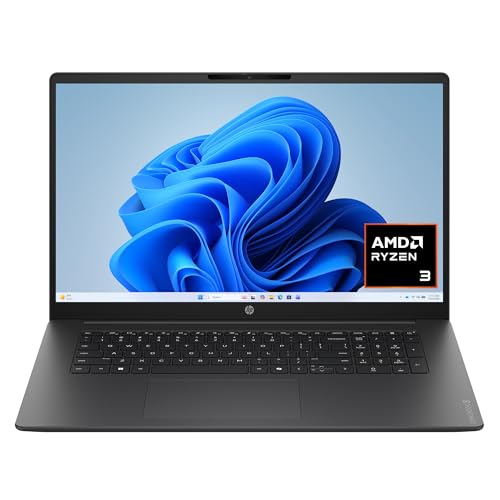
Best for: Large-screen home and school computing
The HP OmniBook 3 17.3-inch laptop combines a roomy Full HD IPS display with a practical everyday setup. Its 178-degree viewing angle helps keep colors and details visible from the side. An AMD Ryzen 3 processor, 8 GB of LPDDR5 memory, and a 512 GB PCIe NVMe SSD cover web browsing, documents, video calls, streaming, and light photo editing. The Mica Silver finish gives it a clean look, while Windows 11 Home and a dedicated Copilot key add familiar software features.
Its biggest advantage is the large screen, which gives spreadsheets, classes, and streaming more usable space than a 13- or 15-inch notebook. HP rates battery life at up to 14 hours and 15 minutes, though actual runtime will vary with brightness and workload. Fast Charge can reach 50% in about 45 minutes. The FHD camera includes HDR adjustment for backlit calls, and AI noise reduction can focus on your voice. Wi-Fi 6 and Bluetooth 5.4 support current wireless accessories. At $459.99, it offers useful storage and display size without targeting demanding gaming or professional editing.
Pros
- 17.3-inch Full HD IPS screen offers wide 178-degree viewing angles.
- 512 GB SSD provides quick storage for apps, files, and media.
- FHD camera, HDR adjustment, and voice-focused noise reduction improve video calls.
Cons
- AMD Radeon 610M graphics are suited to casual games, not demanding titles.
- 8 GB of memory may feel restrictive for heavy multitasking or advanced editing.
Buying Guide
Software and machine compatibility comes first. A laptop must run your cutting machine’s app, design tools, and file formats without workarounds.
- Operating system: Confirm support for Cricut Design Space, Silhouette Studio, or your preferred software. Windows 11 and current macOS versions cover many common setups.
- Memory and processor: Choose at least 8GB of RAM and a recent Core i5, Ryzen 5, or Apple M-series chip. Pick 16GB for large SVG files, photo editing, or multitasking.
- Display: Look for a 13.3- to 15.6-inch screen with Full HD resolution, 1920 by 1080 pixels, or higher. A touchscreen can help with sketching, but it is not essential.
- Ports and wireless: Require at least two USB ports, Bluetooth 5.0, and Wi-Fi 5 or newer. USB-A remains useful for older cutting machines and flash drives.
- Storage, battery, and price: Choose a 256GB SSD at minimum, or 512GB if you keep photos and project files locally. Aim for eight hours of rated battery life and a price near $500 to $1,000.
If your budget cannot cover every feature, prioritize software compatibility and 8GB or more of memory.
Frequently Asked Questions
How much RAM does a laptop for crafting need?
A laptop for crafting should have 8GB of RAM at minimum, while 16GB gives smoother room for design software and multitasking. Cricut Design Space and Silhouette Studio can work with less, but large SVG files, browser tabs, and image editors use more memory. Choose a 16GB model if your budget allows.
What screen size is best for making crafts on a laptop?
A 15- or 16-inch laptop screen is usually the most practical choice for crafting because it gives design tools and project details more space. A 13- or 14-inch model weighs less and works well for small work areas. Look for a Full HD, 1920-by-1080 display with clear viewing angles.
Can a Chromebook run crafting software?
Yes, a Chromebook can run browser-based crafting tools, but it may not support every desktop cutting-machine app. Cricut Design Space works through a web browser, while some Silhouette, embroidery, or laser-design programs require Windows or macOS. Check the software maker’s requirements before buying, especially if you need USB device support.
Are touchscreen laptops useful for craft projects?
Yes, a touchscreen laptop can make drawing, arranging shapes, and zooming through project files easier, but it is not essential for most crafting tasks. A compatible stylus helps with handwritten designs and detailed edits. Before buying, confirm pen support, because some touch displays accept finger input but do not work with active pens.
Conclusion
The HP OmniBook 3 Laptop PC is the top pick for crafters who need a practical everyday computer for design software, cutting-machine tools, and project planning. If your priority is a smaller footprint for craft fairs or limited desk space, choose the most compact 2-in-1 option in the roundup, since its flexible design is easier to carry and store. Consider how many browser tabs, design files, and connected devices you normally use. Larger projects may need extra memory and storage, while simple templates and online tutorials require less. Before buying, double-check the laptop’s screen size, compatibility with your cutting machine and preferred apps, included storage or accessories quantity, and current price.
