
5 Best Laptop With Cooling System for Gaming
Havit HV-F2056 Laptop Cooling Pad is the top pick for most buyers because it combines broad laptop support with three quiet fans and a low price. For shoppers seeking the best laptop with cooling system, this USB-powered pad offers a mesh surface, two height settings, and support for laptops up to 17 inches. It is simple, portable, and easy to store.
This guide is for anyone whose notebook runs hot during gaming, streaming, or long work sessions. The key factors are platform size, fan noise, airflow, build material, and USB convenience, since a cooler must fit securely without blocking ports or adding much bulk. The 5 picks below are ranked with clear reasons and honest drawbacks for each, so you can match the cooler to your laptop and desk setup.
Quick Comparison
| # | Product | Best For | Price | |
|---|---|---|---|---|
| 1 | Havit HV-F2056 Laptop Cooling Pad | Budget-conscious laptop users | $27.99 | View → |
| 2 | Kootek Laptop Cooling Pad Stand | Adjustable desk workstation setups | $29.99 | View → |
| 3 | llano V12 Gaming Laptop Cooling Pad | High-performance gaming laptop owners | $91.19 | View → |
| 4 | Laptop Cooling Pad with Detachable Fan | Travelers needing portable cooling | $49.99 | View → |
| 5 | Razer Adaptive Smart Laptop Cooling Pad | Razer ecosystem gamers | $126.28 | View → |
5 Top Laptops With Cooling Systems
These five laptops are ranked from fifth place down to the top pick, with cooling design, performance, and value guiding the order.
5. Razer Adaptive Smart Laptop Cooling Pad

Best for: Razer Blade owners seeking lower temperatures
The Razer Laptop Cooling Pad uses a 140 mm brushless fan that reaches up to 3,000 RPM. Its foam seals form a pressure chamber, directing more air toward the laptop instead of letting it escape around the edges. Three magnetic frames fit laptops from 14 to 18 inches, giving owners a better match for different chassis sizes. Automatic fan control adjusts cooling as system demand changes.
Razer Synapse adds preset and custom fan curves, so you can favor lower noise or cooler internal temperatures. The pad also includes three USB-A ports for accessories such as webcams and controllers. Physical buttons control fan speed and Chroma RGB lighting, with remapping available for volume or app shortcuts. The $126.28 price includes a two-year manufacturer warranty. Razer HyperBoost can help compatible Blade laptops sustain higher power limits, but that feature does not apply broadly to every laptop.
Pros
- Automatic fan control adjusts speed as laptop temperatures and workloads change.
- Three magnetic frames support laptops between 14 and 18 inches.
- Three USB-A ports add connections for peripherals without using every laptop port.
Cons
- At $126.28, this cooling pad costs more than basic single-fan models.
- Custom curves, button remapping, RGB controls, and HyperBoost depend on Razer software or compatible Blade hardware.
4. Laptop Cooling Pad with Detachable Fan

Best for: Gamers using laptops under 17 inches
This $49.99 cooling pad combines a laptop stand, detachable fan, phone holder, and Peltier cooler. It supports two cooling levels, 5W for lighter use and 20W for more demanding sessions. The design fits laptops and tablets, with a carbon steel and ABS frame rated for devices smaller than 17 inches. USB-C power works with compatible laptops, adapters, and power banks.
Its adjustable design gives you multiple viewing angles, while the base rotates 360 degrees. That can help position the screen for typing, video calls, or shared viewing. The phone holder keeps a handset nearby, but its fixed size may limit compatibility with bulky cases. RGB lighting adds color to a desk setup, and the manufacturer describes the fan as very quiet. At 20W, the cooler offers more active cooling than a basic raised stand, though power needs will be higher.
Pros
- Two cooling levels, 5W and 20W, suit light work or longer gaming sessions.
- Carbon steel and ABS construction supports laptops under 17 inches.
- Adjustable angles, 360-degree rotation, and a phone holder improve desk positioning.
Cons
- USB-C power is required, so you need a compatible adapter, laptop port, or power bank.
- RGB lighting and a detachable cooling system may feel unnecessary for buyers who only need a simple laptop stand.
3. llano V12 Gaming Laptop Cooling Pad

Best for: Large gaming laptops under heavy load
The llano V12 is a powered cooling pad and stand for laptops from 15.6 to 19 inches. Its 5.5-inch turbo fan pushes air across the underside, while the included foam seal helps direct airflow toward the vents. llano claims the pad can lower combined CPU and GPU temperatures by up to 44°C in 90 seconds, though real results depend on the laptop and workload. The listed noise level reaches 70 dB.
A scroll wheel controls fan speed without software. Three USB 2.0 ports add connections for a mouse, keyboard, or external drive, but they do not charge devices. A removable dust filter catches hair and debris before it reaches the fan area. The stand offers 3°, 12°, and 15° tilt settings, plus RGB lighting with 10 modes and four color choices. It includes a 36W power adapter, USB-A to USB-C cable, spare dust filter, and memory foam seal. At $91.19, it targets users who need stronger cooling than a basic laptop stand provides.
Pros
- The 5.5-inch fan and foam seal support focused airflow for larger gaming laptops.
- Three USB 2.0 ports free up laptop connections for common peripherals.
- Three tilt angles and a removable dust filter improve daily usability.
Cons
- A maximum noise rating of 70 dB may be distracting during demanding workloads.
- The USB ports are for peripherals only, not charging phones or other devices.
2. Kootek Laptop Cooling Pad Stand

Best for: Multi-size laptops on a desk
The Kootek Laptop Cooling Pad is a powered stand for 12- to 17-inch laptops, priced at $29.99. It uses five fans: one 4.72-inch fan and four 2.76-inch fans. Two switches select one fan, four fans, or all five. The same controls also manage the blue LED lights. Two front stoppers help keep a laptop from sliding during use.
Six height settings let the pad change the laptop’s viewing angle for work, video, or gaming. The fan design aims for quiet operation, so it should create less distraction than a louder cooler, though noise can vary by setting and laptop placement. A built-in two-port USB hub adds connections for peripherals, but the included cable uses USB-to-USB. Devices with USB-C need an adapter. Compatibility covers common 12- to 17-inch models from Apple, HP, Dell, ASUS, and Alienware. Its size may suit a desk better than a small lap surface.
Pros
- Five fans offer three selectable cooling modes.
- Six height positions support different viewing angles.
- Two USB ports add room for accessories.
Cons
- The included cable occupies one laptop USB port, and USB-C laptops need an adapter.
- Blue LEDs switch with the fans, with no separate light-only control.
1. Havit HV-F2056 Laptop Cooling Pad
Best for: Portable laptop users needing airflow
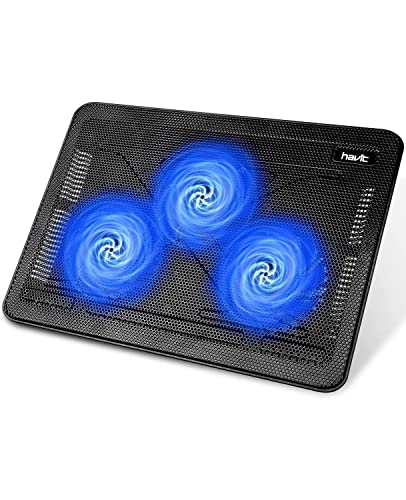
At $27.99, the havit HV-F2056 is a slim cooling pad for 15.6- to 17-inch laptops. Its metal mesh surface supports the computer while allowing air to move underneath. Three fans provide active cooling, and the design aims to keep fan noise low during work, browsing, or light gaming. It connects through the included USB-to-USB cable, so it needs a powered USB connection.
This pad also works as a basic laptop stand. Two adjustable height settings can raise the screen and change the keyboard angle, which may make longer typing sessions more comfortable. The extra USB port lets you connect another USB device while the pad is in use. Its thin, lightweight body fits easier into a laptop bag than a bulky desktop cooling stand. Keep in mind that USB-C devices need a separate USB-C-to-USB adapter. The $27.99 price makes it a practical accessory, but it is better suited to portable use than heavy cooling demands.
Pros
- Fits laptops from 15.6 to 17 inches.
- Three fans provide airflow beneath the metal mesh surface.
- Two height settings add stand functionality and viewing flexibility.
Cons
- The package includes a USB-to-USB cable, not a USB-C adapter.
- Only two height positions limit adjustment compared with stands offering more settings.
Buying Guide
The most important factor is sustained cooling capacity, not the number of fans. A laptop that keeps its processor and graphics chip below thermal limits can maintain speed during long gaming, editing, or 3D workloads.
- Cooling hardware: Look for two fans, several copper heat pipes, and a vapor chamber on higher-power models. A cooling pad cannot fix a poorly designed chassis.
- Processor and graphics power: Match cooling to the components. Gaming laptops should pair strong cooling with a dedicated GPU rated around 100 to 175 watts and a processor configured for 45 watts or more.
- Airflow layout: Choose intake vents underneath and exhaust openings at the rear or sides. Avoid models that place all intake vents where bedding or clothing can block them.
- Noise and profiles: Check independent reviews for sustained-load noise below 50 decibels in balanced mode. Fan software should include quiet, balanced, and performance presets.
- Serviceability and support: Prefer a removable bottom panel, accessible fans, and replacement parts from the manufacturer. Clean the vents every 6 to 12 months, and seek at least a one-year warranty.
If you cannot have everything, prioritize cooling hardware and sustained-load temperatures over a thinner body or extra display features.
Frequently Asked Questions
How do laptop cooling systems work?
Laptop cooling systems move heat from the processor and graphics chip to heat pipes, fans, and outside vents. Most gaming models use two or more fans, copper heat pipes, and rear or side exhausts to control temperatures during demanding work. Dust buildup can reduce airflow, so regular cleaning still matters.
What makes a laptop cooling system effective for gaming?
A gaming laptop cooler works best when it combines strong airflow with enough internal space for heat to spread and exit. Look for multiple heat pipes, two fans, adjustable performance modes, and vents that remain clear on a desk. A thicker chassis often allows quieter cooling than an ultra-thin design.
Can cooling pads lower laptop temperatures?
Yes, a cooling pad can lower laptop temperatures, but the improvement is usually modest and depends on vent placement and fan quality. A pad with adjustable fans may reduce temperatures by roughly 2 to 8 degrees Celsius in favorable setups. It cannot fix blocked vents, dried thermal paste, or weak internal fans.
Are laptops with advanced cooling worth buying?
Advanced cooling is worth paying for when you run games, video editing, or other heavy workloads for 30 minutes or longer. It matters less for web browsing and office work. A larger cooler may add weight and fan noise, while a thin model may throttle sooner under sustained loads.
Conclusion
The Havit HV-F2056 Laptop Cooling Pad remains the top pick for students, office users, and casual gamers who want a slim, affordable way to improve airflow under a warm notebook. If your priority is sustained gaming performance, choose a larger powered cooling stand with stronger fans and height adjustment instead, since it can move more air and provide a better desk setup for heavier laptops. Before buying, double-check your laptop’s dimensions, port and fan compatibility, the number of fans included, and the current price, since listings can change and similarly named versions may differ. Also confirm that the pad fits your desk, leaves room for your mouse, and feels stable at your preferred angle.
