
4 Best Laptop for Dual Monitors for Office Work
The 15.6-Inch Portable Laptop Screen Extender Monitor is the top pick for most buyers seeking the best laptop for dual monitors because it adds a 15.6-inch second display in a travel-friendly format. That makes it a practical choice for multitasking, especially when desk space is limited or a built-in laptop screen feels cramped.
This guide is for remote workers, students, and anyone who wants two screens without carrying a full-size desktop monitor. For these portable display accessories, check the screen size, mounting fit, weight, and connection requirements before buying. A larger panel can improve side-by-side work, but it may add bulk to your bag. The four picks below are ranked with clear reasons and honest drawbacks for each, so you can choose the right setup for your desk and travel routine.
Quick Comparison
| # | Product | Best For | Price | |
|---|---|---|---|---|
| 1 | 15.6-Inch Portable Laptop Screen Extender Monitor | Frequent business travelers | $189.99 | View → |
| 2 | VisionOwl Dual 15.6-Inch Portable Monitor | Multitasking spreadsheet professionals | $419.99 | View → |
| 3 | InnoView Dual Portable Monitor | Remote workers needing dual screens | $239.99 | View → |
| 4 | KEFEYA Laptop Screen Extender | Laptop users with limited desk space | $129.99 | View → |
4 Top Laptops for Dual-Monitor Setups
The list is ranked by display support, ports, performance, and value, counting down to the top pick.
4. KEFEYA Laptop Screen Extender

Best for: Remote workers needing two screens
The KEFEYA Laptop Screen Extender adds a 14-inch external display to laptops from 13 to 17 inches. Its IPS panel runs at 1920×1080 resolution, 60Hz, and up to 300 nits, with a 72% NTSC color range. That suits documents, video calls, spreadsheets, and streaming. Brightness, contrast, and backlight settings can be adjusted separately from the laptop.
The monitor includes one USB-C cable, one USB-C-to-USB-A cable, and one HDMI cable. USB-C connections can support plug-and-play use without extra drivers, while HDMI requires a separate USB-A-to-USB-C connection for power. The screen can mirror or extend your desktop, and it rotates up to 180 degrees for landscape or portrait viewing. It also works with listed Windows, Mac, Chrome, Linux, Android, Switch, PS4, Xbox, and PS5 devices, but USB-C laptop support depends on whether that port carries video. At $129.99, it offers a practical second-screen setup without carrying a full-size monitor.
Pros
- 14-inch 1080p IPS display gives text and video more room than a laptop screen alone.
- Included USB-C and HDMI cables reduce the need for separate accessories.
- Rotation and mirror or extend modes suit presentations, coding, spreadsheets, and calls.
Cons
- HDMI use needs an extra power connection, which adds cable clutter.
- The 300-nit brightness may look limited in direct sunlight or bright rooms.
3. InnoView Dual Portable Monitor
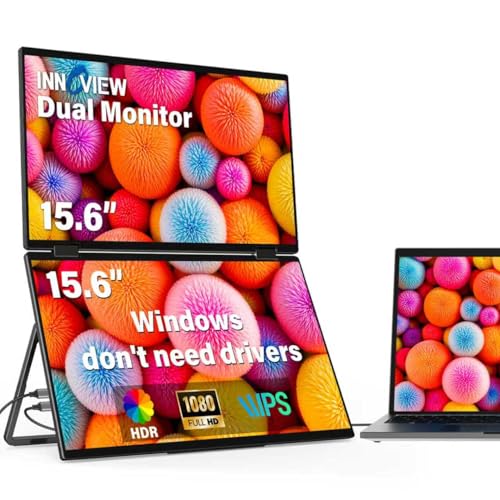
Best for: Remote workers needing vertical screens
This $239.99 portable monitor adds two 15.6-inch IPS displays to a laptop setup. Each panel runs at 1920 x 1080, giving you two Full HD work areas for spreadsheets, browser windows, or code. The foldable body is easier to carry than two separate monitors and suits a desk that cannot keep permanent screens. A single USB-C connection can carry the image and power, but the included 30W adapter must supply the monitor. HDMI is also available for compatible devices.
Windows users can use extended display mode without installing drivers. Mac users need to install the supplied display driver for extended mode, then connect through USB-C. The monitor supports extension, duplication, and spliced layouts, so its setup can change from work to presentations. Its vertical arrangement helps keep reference material visible, while the listed 315-degree adjustment gives more positioning flexibility. The feature details also specify a 180-degree adjustable stand and automatic 180-degree rotation. That wording suggests buyers should confirm the desired viewing angle before ordering. An 18-month warranty and 30-day return period reduce purchase risk, but this remains a specialized accessory.
Pros
- Two 15.6-inch IPS panels provide 1920 x 1080 resolution on each screen.
- Windows setup requires no driver with a compatible connection.
- Foldable construction saves space and supports portable, dual-screen work.
Cons
- Mac extended mode requires driver installation and USB-C connection.
- The monitor needs the included 30W adapter, limiting low-power setups.
2. VisionOwl Dual 15.6-Inch Portable Monitor

Best for: Mobile multitaskers needing two screens
This portable workstation pairs two 15.6-inch, 1080p IPS matte displays in a vertical stack. Each panel runs at 60Hz, uses 8-bit color, and covers a claimed 107% of the sRGB gamut. The arrangement gives laptop users separate space for documents, chats, spreadsheets, or timelines. It supports extended and mirrored modes, but the screens do not form one continuous waterfall-style image.
The full-metal body weighs 3.5 pounds and folds 360 degrees for landscape or portrait positioning. A 120-degree kickstand supports desk use, while VESA mounting adds a more permanent option. Connections include USB-C DisplayPort, USB-C power, and two Mini-HDMI inputs. The package includes USB-C and USB-A cables, two HDMI-to-Mini-HDMI cables, a power adapter, and a padded sleeve. Windows can use a Microsoft-certified DisplayLink driver, while macOS needs the official DisplayLink installation. At $419.99, the broad accessory bundle helps, but this remains a costly travel display.
Pros
- Two stacked 15.6-inch screens create more workspace in a compact footprint.
- Matte IPS panels offer 1080p resolution, 60Hz refresh, and wide color coverage.
- Included cables, adapter, and sleeve reduce setup purchases.
Cons
- The 3.5-pound weight adds noticeable bulk to a laptop bag.
- macOS users must install DisplayLink, and the unit needs separate power for some setups.
1. 15.6-Inch Portable Laptop Screen Extender Monitor
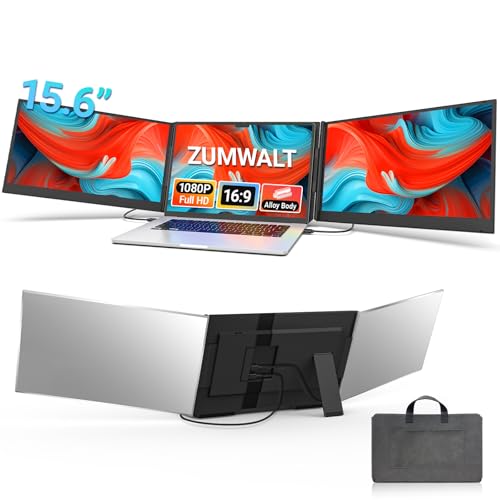
Best for: Remote workers needing three screens
This 15.6-inch laptop screen extender adds two 15.6-inch Full HD displays to a compatible laptop. Each panel runs at 1920 x 1080 resolution, with 280 nits brightness and a 178-degree viewing angle. The aluminum shell measures a claimed 4 pounds, or 1.8 kg, and comes with a leather carrying bag. It supports extended, mirrored, and portrait screen modes, so it can suit spreadsheets, presentations, coding, or travel work.
The main appeal is the larger workspace without carrying a separate desktop monitor. With a laptop that supports full-featured USB-C, setup uses two USB-C to USB-C cables and does not require drivers. Windows, Mac, Chrome, Android, and Switch compatibility is listed, but support depends on the specific device. M1, M2, and M3 MacBooks, along with laptops without full-featured USB-C, need an H5-T cable, HDMI, USB-A, external power, and driver installation. The screens fit laptops listed from 13 to 17.3 inches, despite the product title also mentioning 12-inch models.
Pros
- Two 15.6-inch 1080p panels provide a wide three-screen layout.
- USB-C plug-and-play setup can reduce cable clutter on supported laptops.
- Aluminum housing and a carrying bag make transport more practical.
Cons
- At 4 pounds, this is heavy for frequent air or rail travel.
- Some laptops need extra cables, external power, and drivers, which weakens the simple setup.
Buying Guide
For a laptop driving two external displays, video-output support matters most. A powerful processor cannot help if the computer lacks two compatible connections or needs an unreliable adapter.
- Video outputs: Look for two direct display paths, such as HDMI plus USB-C with DisplayPort or two USB4 ports. A dock can work, but confirm support for two monitors at your target resolution.
- Graphics hardware: Integrated graphics can handle two 1080p screens for office work. Choose a dedicated GPU with at least 4GB of video memory for 1440p displays, creative software, or light gaming.
- Processor and memory: Select a recent Core Ultra 5, Ryzen 5, or equivalent chip with 16GB of RAM. Choose 32GB for virtual machines, large spreadsheets, or frequent video editing.
- Screen and battery: A 14- to 16-inch laptop with a 1080p or sharper screen offers useful workspace away from the desk. Seek a battery rated for at least 8 hours, since two displays increase power use.
- Dock and desk setup: Budget $100 to $250 for a compatible USB-C or Thunderbolt dock, cables, and a keyboard. Confirm the dock supports your monitors’ resolution and refresh rate.
If you cannot have everything, prioritize confirmed support for two external displays before processor speed or portability.
Frequently Asked Questions
How many monitors can a laptop support at once?
A laptop can support two external monitors if its ports, graphics hardware, and operating system allow it. Look for two video outputs, or use a compatible USB-C dock with DisplayLink. HDMI and USB-C outputs often handle two 1080p screens, while higher resolutions may require Thunderbolt 4.
What ports should a laptop have for two monitors?
A laptop should have two usable video connections, such as HDMI, DisplayPort over USB-C, or Thunderbolt, for a simple dual-screen setup. A USB-C port must support video output, not just charging and data. For example, one HDMI port plus one Thunderbolt 4 port can connect two 1440p displays.
Can any laptop run dual monitors?
Not every laptop can run two external monitors without extra hardware, because some USB-C ports lack video output and integrated graphics may have display limits. A docking station can help, but DisplayLink models need drivers. Check the manufacturer’s maximum monitor count before buying, especially for budget laptops under $600.
Are gaming laptops good for dual monitor setups?
Gaming laptops are often good for dual-monitor setups because they usually include stronger graphics and several display outputs, but they can cost more and run hotter. A model with HDMI 2.1 and USB-C DisplayPort can support a 4K monitor plus a 1440p screen. The GPU determines the final limit.
Conclusion
The 15.6-Inch Portable Laptop Screen Extender Monitor is the top choice for remote workers who need two screens without a permanent desk setup. If your priority is a lighter travel kit, choose a single USB-C portable monitor instead, since it takes less space and usually needs fewer connections. Before buying, double-check the extender’s screen size, your laptop’s operating-system and port compatibility, the number of displays included, and the current price. These attachments help with spreadsheets and video calls, but they add weight and can use laptop battery power. Check the hinge, viewing angle, and cable placement before committing. A simpler portable monitor may suit frequent travelers better.
