
7 Best Drone VTX for Long-Range FPV Builds
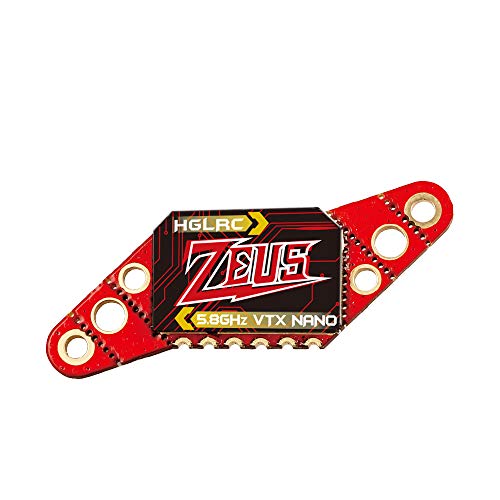
HGLRC Zeus350mW VTX is the best drone vtx for most buyers because it balances 350mW transmission power with a compact FPV build. That output gives pilots a useful middle ground for everyday freestyle, racing practice, and casual long-range flights. It is not the highest-powered transmitter available, but many pilots do not need extreme output or extra size.
This guide is for FPV beginners, builders replacing a damaged video transmitter, and experienced pilots comparing affordable upgrades. The key factors are transmission power, physical size, heat management, and compatibility with your flight controller and goggles. Antenna mounting and power input also matter, since poor fit can cause video issues or installation problems. The 7 picks below are ranked with clear reasons and honest drawbacks for each, so you can match a video transmitter to your drone and flying style.
Quick Comparison
| # | Product | Best For | Price | |
|---|---|---|---|---|
| 1 | HGLRC Zeus350mW VTX | Long-Range Freestyle Drone Builders | $26.99 | View → |
| 2 | CADDXFPV Walksnail Avatar Pro VTX Kit | Walksnail HD Upgrade Seekers | $199.99 | View → |
| 3 | AKK BA3 AIO FPV Camera and Transmitter | Compact AIO Whoop Builders | $26.99 | View → |
| 4 | CADDXFPV Walksnail Avatar GT2 VTX Kit | Walksnail Long-Range HD Pilots | $169.99 | View → |
| 5 | AKK KC03 FPV Camera and Transmitter | Budget Micro FPV Beginners | $34.99 | View → |
| 6 | BETAFPV Aquila20 HD FPV Drone Kit | Ready-To-Fly HD Training Pilots | $412.99 | View → |
| 7 | SoloGood Rush Tank FPV Video Transmitter | Rugged Racing Quad Builders | $58.99 | View → |
7 Top Video Transmitters for FPV Drones
These picks are ranked by features, compatibility, and value, counting down to the top choice for different FPV setups.
7. SoloGood Rush Tank FPV Video Transmitter

Best for: Competitive FPV pilots needing compact video links
The SoloGood Rush Tank is a 5.8GHz FPV video transmitter for racing drones and freestyle builds. It offers 48 channels and four selectable output levels, 25, 200, 500, or 800mW. That range covers low-power pit work, indoor testing, and higher-power outdoor flights. The 20 x 20mm layout should fit many standard flight-controller stacks. A full-metal shell protects the transmitter, while the board weighs 4.46g without its case.
Its side LED provides a quicker way to check operating status during setup. The power-filter design targets cleaner operation across demanding power systems, though installation quality and the rest of the drone still matter. Pit mode drops transmission power for close-range testing, helping reduce disruption when other pilots are nearby. The package includes a Rush Cherry 5.8GHz RHCP antenna with an MMCX elbow connector, so buyers get a matching antenna rather than sourcing one separately. At $58.99, this is a specialized racing component, not a basic starter transmitter.
Pros
- Four power levels support pit mode, short-range testing, and outdoor flying.
- 48 channels and race-focused tuning suit multi-pilot FPV events.
- Includes a matching RHCP MMCX antenna for simpler setup.
Cons
- The 4.46g weight excludes the case, so the installed weight will be higher.
- Higher 500mW and 800mW settings can increase power use and heat.
6. BETAFPV Aquila20 HD FPV Drone Kit

Best for: New FPV pilots wanting HD flight
The BETAFPV Aquila20 HD Kit is a ready-to-fly FPV package with the drone, VR04 HD goggles, and LiteRadio 4 SE transmitter. Its P1 digital video system records and displays 1080p at 60 frames per second, with about 60ms latency and a claimed 400-meter range. The camera uses a 1/2.9-inch CMOS sensor and a 170-degree field of view, giving pilots a broad view through the goggles.
A 2S power system balances quick handling with up to 10 minutes of flight time, depending on conditions and flying style. Beginner N Mode provides altitude hold and stable hovering, while S and M Modes open up manual flips and rolls. Turtle Mode can help right the drone after a crash. The PA410 frame adds impact protection, and the inverted ducts support stable thrust. The goggles include one-button HD recording, glasses-friendly padding, and up to three hours of standby time. The transmitter offers eight channels, Bluetooth simulator support, and more than eight hours of battery life.
Pros
- Complete kit includes the drone, HD goggles, transmitter, and core flight controls.
- 1080p at 60fps provides clearer video than analog FPV systems.
- N Mode, Turtle Mode, and protected ducts make practice less frustrating.
Cons
- The approximately 10-minute maximum flight time requires regular battery changes.
- About 60ms latency and a $412.99 price may not suit racers or budget buyers.
5. AKK KC03 FPV Camera and Transmitter

Best for: Beginner 2S to 4S FPV builds
The AKK KC03 combines a small FPV camera with a 600mW, 5.8GHz video transmitter. Its 2.8mm lens provides a 120-degree viewing angle, while the NTSC camera delivers 800TVL horizontal resolution. That field of view suits compact drones and quadcopters, where pilots need more scene coverage without adding a larger camera.
Two push buttons control channel and frequency changes on the transmitter. This is simpler than using a separate programming tool. A dedicated camera-to-transmitter cable also makes the setup closer to a ready-to-fly video system for first-time builders. The unit accepts 7 to 20 volts and supplies 5 volts to the camera. It works with 2S, 3S, and 4S batteries, but the manufacturer specifically rules out 6S packs. Its low power draw and small size should fit many lightweight airframes, though the listing does not provide exact dimensions or weight.
Pros
- 800TVL resolution and a 120-degree view provide a useful balance of detail and coverage.
- Dual push buttons allow quick 5.8GHz channel and frequency changes.
- The included connecting cable simplifies camera and transmitter installation.
Cons
- It cannot be used with 6S batteries, limiting compatibility with higher-voltage builds.
- NTSC video is not compatible with every FPV display or receiver, so buyers should confirm their system supports this format.
4. CADDXFPV Walksnail Avatar GT2 VTX Kit

Best for: Long-range FPV pilots
The CADDXFPV Walksnail Avatar GT2 VTX Kit is a digital video transmitter and camera system for FPV drones, RC cars, and custom builds. It uses a 2W output mode with Auto or Fixed settings, adjusting power as temperature and surroundings change. The advertised transmission distance reaches 20 km in suitable conditions, though terrain, antennas, interference, and local rules affect real-world range.
Its 1/1.8-inch Sony Starvis II sensor records 1080P video through a very wide 160-degree field of view. That broad image suits freestyle flying and night use, while the stated 22ms latency gives pilots quick video feedback. Adaptive frequency hopping scans for cleaner channels when several pilots share the air. The kit also includes Type-C file transfer, an MMCX antenna connector, and a microSD slot supporting cards up to 256GB. A cooling design helps during longer flights, but the 2W setting can still place extra demand on a drone battery.
Pros
- 20 km claimed range supports long-distance FPV flights in open areas.
- Starvis II sensor and 160-degree view improve visibility in daylight and low light.
- Adaptive channel switching helps reduce interference during group flying.
Cons
- The 20 km figure depends heavily on antennas, terrain, interference, and flight regulations.
- Running at 2W may increase power use and heat, which can shorten flight time.
3. AKK BA3 AIO FPV Camera and Transmitter

Best for: 1S tiny whoop pilots
The AKK BA3 combines a 5.8GHz FPV camera, video transmitter, and brass dipole antenna in one compact unit. It weighs 4.7g, which suits small drones such as Tiny Whoops and Blade Inductrix models. The camera uses a 1/3-inch CMOS sensor with 600TVL resolution, so it should provide a usable analog image for indoor flights and basic outdoor flying. Its 40 channels work with compatible 5.8GHz goggles and monitors.
A physical power setting lets you choose 0, 25mW, 50mW, or 200mW output. Lower settings make more sense around other pilots or indoors, while 200mW can help when flying farther away, subject to local rules and the aircraft’s battery capacity. The camera accepts power from a 1S LiPo, matching many ultra-micro builds. AKK also lists improved low-light performance, which may help in dim rooms, though 600TVL remains modest by current FPV standards. At $26.99, this setup can reduce wiring and save space compared with installing separate parts.
Pros
- Three functions in one 4.7g unit saves room on small frames.
- Four selectable power levels support indoor and outdoor flying.
- 40-channel, 5.8GHz video works with common analog FPV equipment.
Cons
- It needs a 1S LiPo, limiting compatibility with larger drone power systems.
- The 200mW setting can increase heat and battery demand on tiny aircraft.
2. CADDXFPV Walksnail Avatar Pro VTX Kit

Best for: Low-light freestyle FPV pilots
The CADDXFPV Walksnail Avatar Pro VTX Kit combines a digital video transmitter, camera, antennas, and onboard recording in a 33g package. Its 1/1.8-inch Starvis II sensor records 1080p video at 60 frames per second, while the 160-degree field of view gives pilots a broad view around gates, trees, and tight gaps. H.265 encoding helps manage high-definition footage without requiring a separate recorder.
This air unit also includes a built-in gyro for Gyroflow stabilization and 32GB of internal storage. The maker says that capacity can hold hours of HD footage, though actual recording time depends on video settings. Dual high-gain antennas support a claimed 4km transmission range, with 22ms latency and TVS protection for the electronics. The mounting layout supports both 20×20mm and 25.5×25.5mm patterns, plus two power connection options. It works with Walksnail Avatar HD Goggles X and L, making it a practical choice for pilots already using that system.
Pros
- 1080p/60fps capture and a 1/1.8-inch sensor support clearer low-light footage.
- Built-in gyro and 32GB storage reduce the need for extra recording hardware.
- The 33g weight and two mounting patterns suit many FPV frames and RC cars.
Cons
- The advertised 4km range can vary with trees, buildings, antennas, and local interference.
- Full use requires compatible Walksnail Goggles X or L, which adds to the system cost.
1. HGLRC Zeus350mW VTX
Best for: FPV pilots needing adjustable video power
This HGLRC Zeus VTX is a 5.8GHz video transmitter for FPV racing drones and quadcopters. It offers five output settings: PIT, 25mW, 100mW, 200mW, and 350mW. You can change the transmission level through Betaflight when it is connected to a compatible flight controller. The adjustable range suits indoor practice, close racing, and longer-distance flights better than a fixed-power unit.
The board supports several common mounting layouts, including 16x16mm, 20x20mm, and 25.5×25.5mm patterns. It can fit into a 20x20mm stack, and its M2 and M3 mounting compatibility gives builders more frame options. A built-in microphone sends motor sound through the video feed, which can help locate a landed or crashed quad. The unit also uses an SMA antenna connection. Customer feedback describes the VTX as sturdy, simple to solder, and reliable inside a house. HGLRC publishes wiring diagrams online, though buyers still need to confirm the correct connection for their flight controller.
Pros
- Five Betaflight-selectable power levels, from PIT to 350mW.
- Multiple mounting patterns fit 16x16mm, 20x20mm, and 25.5×25.5mm builds.
- Built-in microphone can transmit motor audio for easier drone recovery.
Cons
- Installation requires soldering and correct flight-controller wiring.
- The listing does not specify included antenna, cable, or mounting hardware, so check the package contents before ordering.
Buying Guide
The most important factor is system compatibility. A video transmitter must match your goggles, receiver, camera signal, connector, and battery voltage to produce a usable picture.
-
Video system: Choose analog 5.8GHz or the exact digital ecosystem your goggles support, such as DJI, Walksnail, or HDZero. Analog and digital parts usually do not interchange.
-
Transmission power: Pick 25mW for racing, 200–400mW for general flying, or 800mW and higher for long-range use where local rules allow it. Higher output creates more heat and uses more power.
-
Voltage range: Confirm the input range covers your battery. A 2S pack reaches 8.4V, while a 6S pack reaches 25.2V. The transmitter’s current draw must also stay below the BEC’s rating.
-
Size and mounting: Check the frame’s mounting pattern, such as 20×20mm or 30×30mm. Keep the unit under about 20g for lightweight builds, and match the antenna connector, including U.FL, MMCX, or SMA.
-
Cooling and features: Choose a model with airflow around its heatsink, especially above 400mW. Pit mode, adjustable channels, and SmartAudio or Tramp control simplify setup and frequency changes.
If you cannot have everything, prioritize compatibility first, then choose the highest legal power your frame can cool.
Frequently Asked Questions
How do I choose a drone VTX?
Choose a drone VTX by matching its video system, frequency, power, camera connection, and available space. Analog units suit analog goggles, while HD models require compatible digital gear. Check power settings such as 25, 200, or 800 mW, but follow local rules and avoid using more power than needed.
What VTX power should I use for my drone?
Use 25 to 200 mW for many close-range racing setups, while longer-range flights may need 400 to 800 mW if the system and local regulations allow it. Higher output can increase heat, current draw, and interference, so the best transmitter is the lowest-power model that maintains a reliable signal.
Can an analog VTX work with digital goggles?
An analog VTX cannot send video directly to digital-only goggles, so both devices must use the same video standard or a compatible receiver. Some goggles accept analog through a separate module, but that adds hardware. For example, a 5.8 GHz analog transmitter still needs an analog receiver, not just matching frequency.
Are higher-priced drone video transmitters worth it?
Higher-priced VTX units are worth it when you need HD video, remote power control, better cooling, or a known digital ecosystem. They are not necessary for basic analog flying. A budget 5.8 GHz unit may cover simple builds, while an HD system can add cost through its camera, goggles, and mounting requirements.
Conclusion
HGLRC Zeus350mW VTX is the top pick for FPV pilots who want a practical balance of transmission power, board size, and everyday value. If your priority is the lightest possible build, choose a smaller, low-power unit instead, since it can reduce weight on compact racing drones. Before buying, double-check the VTX’s physical size, camera and flight-controller compatibility, package quantity, and current price. Also confirm the power levels match local rules and your goggles or receiver setup. A higher output rating does not automatically mean a better flight. The right video transmitter should fit the frame, connect cleanly, and match how you fly. That matters most on tight builds where every gram counts.
