
7 Best Monocular Telescope for Stargazing on a Budget
For most buyers, the 80×100 Monoculars with Smartphone Adapter is the best monocular telescope for stargazing. Its main advantage is convenience, combining strong stated magnification with a phone adapter for capturing Moon photos. This setup suits casual backyard viewing, travel, and quick wildlife checks without requiring a separate camera mount.
This guide is for shoppers who want a compact, one-eye alternative to binoculars for the Moon, bright planets, and distant scenery. The key choices are optical size and total weight. A larger objective lens can gather more light, but it also makes the tube heavier and harder to hold steady. Lens coating quality, focus control, and a stable phone mount matter too. The seven picks below are ranked with clear reasons and honest drawbacks for each, helping you match a scope to your budget and viewing plans.
Quick Comparison
| # | Product | Best For | Price | |
|---|---|---|---|---|
| 1 | 80×100 Monoculars with Smartphone Adapter | Phone Users Needing Long-Range Views | $79.99 | View → |
| 2 | Monocular Telescope for Smartphones | Smartphone Digiscoping Beginners | $34.19 | View → |
| 3 | 8×42 HD Monocular Telescope | Birdwatchers Wanting Brighter Views | $35.99 | View → |
| 4 | Mini 25X Monocular Telescope | Backpackers Needing Compact Optics | $9.99 | View → |
| 5 | 80X100 Monocular Telescope | Stargazers Seeking High Magnification | $33.99 | View → |
| 6 | 10-300×40 Monocular Telescope | Zoom-Focused Landscape Observers | $25.99 | View → |
| 7 | 12X60 Monocular Telescope with Smartphone Adapter and Tripod | Buyers Wanting Stable Phone Shots | $39.98 | View → |
7 Top Monoculars for Stargazing
These monoculars are ranked for stargazing, counting down to the top pick.
7. 12X60 Monocular Telescope with Smartphone Adapter and Tripod

Best for: Bird watching on day hikes
This 12×60 monocular combines 12x magnification with a 60mm objective lens. The larger front lens can gather more light than compact monoculars, making it useful for birds, wildlife, scenery, concerts, and distant trail features. Its black rubber armor adds grip and helps protect the body during outdoor use.
The optical system uses a BAK4 prism and FMC multi-coated lenses to reduce reflected light and improve contrast. Images should appear brighter and more natural in good daylight, though no compact monocular replaces a full-size spotting scope in low light. A twist-up eyecup lets glasses wearers adjust the viewing position. The kit includes a phone holder, tripod, carry pouch, cleaning cloth, and manual, giving buyers the basic tools for viewing and taking phone photos. At $39.98, it offers a broad accessory package for casual outdoor use.
Pros
- The 12x power helps reveal details on distant birds, animals, and scenery.
- The 60mm lens, BAK4 prism, and FMC coatings support brighter, higher-contrast daytime views.
- The included tripod and adjustable phone holder make hands-free viewing and smartphone photos easier.
Cons
- Twelve-power magnification makes hand shake noticeable, so steady support helps with distant subjects.
- Phone-holder fit and alignment can vary by smartphone size and camera placement.
6. 10-300×40 Monocular Telescope

Best for: Concert viewers and casual birdwatchers
The Belmeri monocular is a compact handheld scope priced at $25.99. It has an advertised 10-300x zoom range and a 40-size designation, giving buyers plenty of magnification for distant subjects. Its small, lightweight body can fit in a pocket or backpack. The BAK4 prism and FMC lens coatings are designed to support clearer viewing and better light transmission during outdoor use.
Using it takes a few adjustments. Pull the two sections apart, set the eyepiece for glasses or bare eyes, then turn the focus wheel until the subject looks sharp. A separate zoom ring changes the viewing range, but high magnification can make a handheld image difficult to keep steady. This scope suits concerts, hikes, birdwatching, and basic stargazing. The package does not include a smartphone adapter or tripod, so phone photos and stable long-distance viewing require extra purchases.
Pros
- Advertised 10-300x zoom covers nearby and distant viewing.
- BAK4 prism and FMC lens support brighter, sharper images.
- Pocket-size design is easy to carry on hikes or trips.
Cons
- Very high magnification may be hard to hold steady without a tripod.
- Smartphone adapter and tripod are not included, limiting stable photos and hands-free use.
5. 80X100 Monocular Telescope

Best for: Budget wildlife viewing and phone photos
This $33.99 monocular targets birdwatchers, hikers, hunters, and casual stargazers. Its claimed 80x magnification pairs with a 100mm objective lens, a large front lens that can gather more light than smaller models. BAK-4 prisms and fully multi-coated glass are designed to improve brightness and reduce color fringing. The listed light transmission reaches 99.5 percent, though real results will depend on weather, focus, and viewing conditions.
The kit includes a quick-alignment smartphone holder and a small tripod for steadier photos and video. A rubberized grip supports one-handed handling, while the twist-up eyecup can accommodate glasses. Its moisture-resistant construction suits camping and wildlife use, but the product listing does not provide an IP rating or submersion guidance. The 100mm lens also makes this more of a field setup than a pocket optic. At high magnification, the tripod will matter for clear views.
Pros
- Large 100mm objective lens: Helps collect more available light for daytime wildlife viewing and low-light scenes.
- Included phone holder and tripod: Makes it easier to capture distant subjects without holding the monocular by hand.
- BAK-4 prisms and coated lenses: Supports brighter images with less color distortion than basic, uncoated optics.
Cons
- 80x magnification needs steady support: Handheld views may shake noticeably, especially at the highest setting.
- Limited weather details: The listing says waterproof, but it gives no protection rating, tested depth, or rain-use limits.
4. Mini 25X Monocular Telescope

Best for: Casual hikers and bird watchers
This compact monocular is designed for quick outdoor viewing without the bulk of full-size binoculars. Its listed 25X magnification and 25 mm objective lens aim to bring distant birds, trail markers, and scenery closer. The green multilayer coating helps pass more light through the optics, which can improve image brightness in daylight and during early-morning viewing. A simple focus adjustment keeps setup straightforward for children and adults.
The rubber-armored housing gives the grip more traction and adds protection against everyday bumps. Its waterproof construction can help during light rain or damp hikes, though no depth rating is provided. A clip-on universal phone adapter is included, so users can line up a smartphone with the eyepiece and capture distant views. At $9.99, this monocular offers a low-cost way to explore bird watching, travel, or casual stargazing. The product information also lists “2000X25,” which conflicts with the 25X description. Buyers should confirm the actual magnification before ordering.
Pros
- Green multilayer optics can improve light transmission and daytime image brightness.
- Rubber armor provides a steadier, more comfortable grip outdoors.
- Included phone adapter supports quick smartphone photos through the eyepiece.
Cons
- The listing gives conflicting magnification information, showing both 25X and 2000X25.
- No waterproof depth rating or optical field-of-view measurement is provided, so its limits in heavy rain and detailed viewing remain unclear.
3. 8×42 HD Monocular Telescope
Best for: Casual birding and scenic hikes
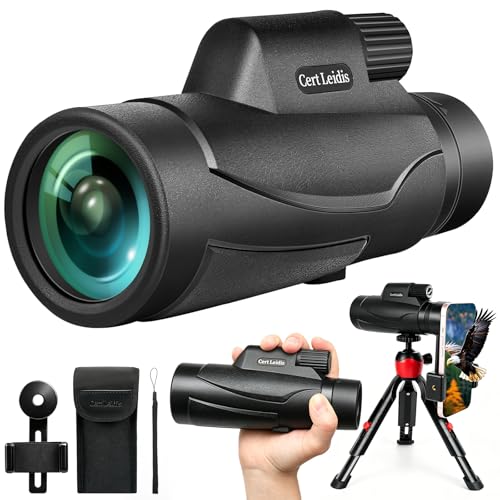
The Monocular Telescope 8×42 uses an 8x magnification and 42mm objective lens for handheld viewing. Its listed field of view reaches 360 feet at 1,000 yards, which should make it useful for spotting birds, trails, boats, and distant landmarks. The compact body can fit in a backpack or glove compartment.
Inside, BAK-4 prism glass and fully multi-coated lenses aim to improve light transmission, color accuracy, and contrast. The nitrogen-filled housing carries an IPX7 waterproof rating, plus fog, dust, and shock protection. A rubber exterior adds grip in wet weather. The package includes a small tripod and smartphone adapter, so you can steady the view or line up a phone camera for distant subjects. At $35.99, it offers a broad accessory package for casual outdoor use, though phone images will still depend on your phone’s camera and alignment.
Pros
- 8x magnification and a 42mm lens provide a useful balance of reach and handheld stability.
- BAK-4 prisms and FMC lenses can produce brighter, higher-contrast views than basic coated optics.
- The included tripod and phone adapter support steadier viewing and simple phone photography.
Cons
- The compact tripod may not provide the stability of a full-size camera tripod.
- Eight-power magnification is limited for serious astronomy or very distant wildlife observation.
2. Monocular Telescope for Smartphones

Best for: Wildlife viewers using phones
This 80×100 monocular is designed for wildlife, hiking, hunting, sports, and scenic viewing. Its 100mm objective lens provides a broad view, while the claimed 80x magnification applies when paired with a 10x smartphone lens. Dual focus controls help bring distant subjects into view. At the listed $34.19 price, it offers a low-cost way to explore higher magnification without buying a full telescope.
The optical system uses a BAK4 prism and fully multi-coated glass lenses. These materials can improve light transmission and reduce haze, giving you a brighter image in daylight and low-light settings. The stated field of view reaches 363 feet at 1,000 yards, or 121 meters at 1,000 meters, with a viewing angle up to 7 degrees. A tripod and phone adapter are included for photos and video. The low-light design still needs some available light, so it cannot show images in complete darkness.
Pros
- BAK4 glass and FMC coatings can produce clearer, brighter views.
- Included tripod helps reduce shake during phone photos and video.
- Phone adapter works with many Android and iOS devices.
Cons
- The 80x claim depends on pairing the monocular with a 10x smartphone lens.
- It does not provide night vision in total darkness, and high magnification can make handheld views difficult to keep steady.
1. 80×100 Monoculars with Smartphone Adapter
Best for: Outdoor observers using a tripod
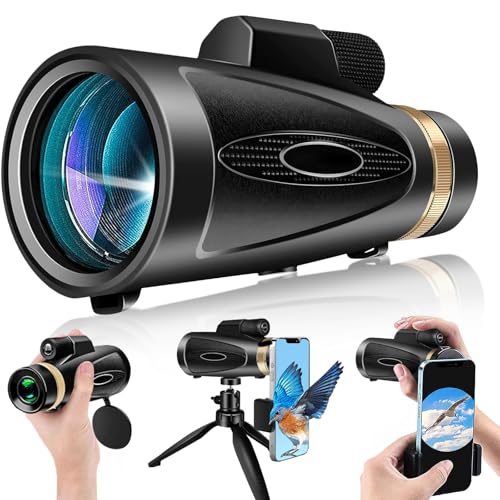
This $79.99 monocular pairs claimed 80x magnification with a large 100mm objective lens. That combination targets long-distance viewing during bird watching, hiking, camping, sports, and travel. Its BAK-4 prism and fully multi-coated lenses are designed to pass more light and reduce image loss. The result should be a brighter view than basic, single-coated optics, especially in daylight.
The package includes a smartphone adapter and tripod, giving you a way to steady the image and capture observations. The adjustable eyecup twists into position for viewing with or without glasses. One-handed focusing also suits outdoor use, but the high magnification will make hand-held viewing difficult. The 100mm front lens adds light-gathering ability, though it also makes this scope less compact than a small travel monocular. Smartphone fit can vary by phone size and camera placement, so check compatibility before buying. Its listed uses are broad, but the product details do not provide a weight, field-of-view measurement, or low-light performance rating.
Pros
- BAK-4 prism and fully multi-coated lenses support brighter, sharper daytime images.
- Included tripod can reduce shake at the advertised 80x magnification.
- Adjustable eyecup works for users with or without glasses.
Cons
- A 100mm objective lens may make the monocular bulky for long hikes.
- Extremely high magnification is hard to hold steady without the tripod.
Buying Guide
Aperture is the most important factor for a stargazing monocular. A larger front lens gathers more light, making stars and faint lunar features easier to see in dark skies.
- Aperture: Choose 50mm to 80mm for astronomy. Models below 40mm usually produce dimmer views, while lenses above 80mm add noticeable size and weight.
- Magnification: Look for 10x to 20x power. Magnification above 20x can make hand shake distracting unless the monocular includes a tripod mount.
- Optical quality: Choose fully multi-coated glass and a BAK-4 prism when listed. These features help preserve brightness and edge detail, especially during night viewing.
- Eye relief: Aim for at least 15mm of eye relief, or 18mm if you wear glasses. A twist-up eyecup can help position your eyes correctly.
- Stability and size: Confirm a standard 1/4-inch tripod thread. Keep the body under 12 inches and about 3 pounds if you plan to carry it outdoors for long sessions.
If you cannot have everything, prioritize aperture first, then add a tripod for steady, higher-power views.
Frequently Asked Questions
How useful are monocular telescopes for stargazing?
Monocular telescopes work well for casual stargazing, especially when viewing the Moon, bright planets, and star clusters. A 10x or 12x model with a 50mm objective lens offers a practical starting point, though a tripod usually improves image stability at higher magnification.
What magnification is best for a stargazing monocular?
A 10x to 12x monocular usually offers the best balance of magnification, brightness, and steadiness for stargazing. Higher power can make hand movement more noticeable. For example, a 12×50 model gathers more light than a 10×25 version but may need tripod support.
Can a monocular telescope show planets clearly?
A monocular telescope can show the Moon’s craters and Jupiter’s four brightest moons, but it will not reveal detailed planetary surfaces. Under dark skies, a 12×50 optic may show Jupiter’s moons as tiny points, while Saturn’s rings usually remain beyond its useful detail.
Are monoculars easier to use than small telescopes?
Monoculars are usually easier to carry and aim than small telescopes, but they provide less magnification and detail. Many weigh under 1 pound and fit in a jacket pocket. Their single-eye design also helps with quick viewing, while a telescope suits longer sessions and detailed observations.
Conclusion
The top recommendation is 80×100 Monoculars with Smartphone Adapter, a practical choice for casual skywatchers who want phone photos, a large viewing format, and simple setup without buying a full telescope. If your priority is portability for hikes or travel, choose a smaller monocular instead, since it will take less space and feel easier to hold for longer viewing sessions. Before buying, double-check the listed size, smartphone compatibility, package quantity, and current price because marketplace details can change. Also consider your expectations. A monocular can show the Moon’s craters and bright star clusters, but it will not match the detail or steadiness of a mounted telescope. A steady tripod can improve phone images.
