
5 Best Telescope Under 1000 for Beginners
HETEKAN Telescope is the best telescope under 1000 for most buyers because it offers a practical balance of useful features and price. It is a sensible starting point for adults, families, and newer stargazers who want to view the Moon, planets, and brighter deep-sky objects without paying for advanced equipment. Its appeal comes from keeping the buying decision fairly simple.
This guide is for shoppers choosing a first serious telescope, replacing a basic starter scope, or finding a model for family use. The most important factors are optical quality, aperture size, mount stability, and portability. A larger lens or mirror can collect more light, but it often adds weight and setup demands. The five picks below are ranked with clear reasons and honest drawbacks for each, so you can match the telescope to your space, budget, and observing goals.
Quick Comparison
| # | Product | Best For | Price | |
|---|---|---|---|---|
| 1 | HETEKAN Telescope | Budget Moon Viewers | $199.99 | View → |
| 2 | Vertisteel Telescope | Beginner Backyard Stargazers | $199.99 | View → |
| 3 | Celestron 114LCM Computerized Reflector Telescope | Computerized Object Trackers | $429.99 | View → |
| 4 | NACATIN Astronomy Telescope | Portable Astronomy Learners | $269.99 | View → |
| 5 | OAEBLLE 2-in-1 Kids Microscope and Telescope | Kids Dual-Scope Exploration | $26.97 | View → |
5 Top Telescopes Under $1,000
These telescopes are ranked by image quality, ease of use, and value, counting down to the top pick.
5. OAEBLLE 2-in-1 Kids Microscope and Telescope
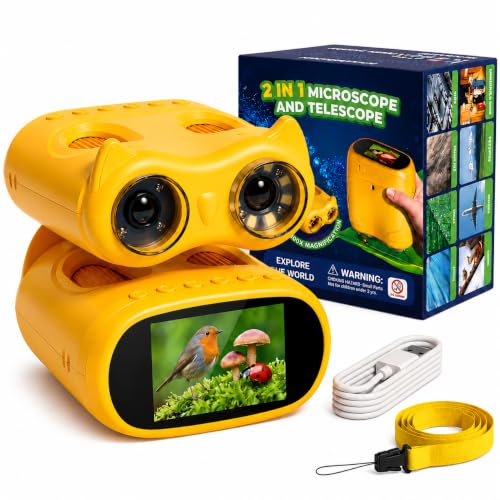
Best for: Backyard science and nature walks
The OAEBLLE combines a handheld digital microscope with a 10X telescope in one compact device. It measures 5.12 by 5.04 by 3.31 inches and weighs 9.9 ounces, so most children can carry it in a backpack. The microscope claims up to 1000X magnification, while the telescope targets subjects from about 3 to 1,000 meters away. That gives kids two ways to explore bugs, leaves, birds, and other outdoor subjects.
A 2.0-inch color screen shows the camera view, and eight built-in LEDs light microscope subjects in dim spaces. The camera saves 1920×1080 photos, with internal storage for about 200 images. Video recording at 1080P and 30 frames per second requires a separate memory card, which can hold up to 128GB. The rechargeable battery takes about two hours to charge. It runs for up to two hours in microscope mode with the lights on, or three hours in telescope mode. At $26.97, the feature mix is strong, though expectations should stay realistic for a small children’s device.
Pros
- Combines a microscope and 10X telescope in one portable unit.
- Eight LEDs and a 2.0-inch screen support close-up viewing in low light.
- Built-in storage saves about 200 photos without a memory card.
Cons
- A memory card is required for 1080P video recording and is not included.
- The small screen and handheld design may make steady, detailed viewing difficult for younger children.
4. NACATIN Astronomy Telescope
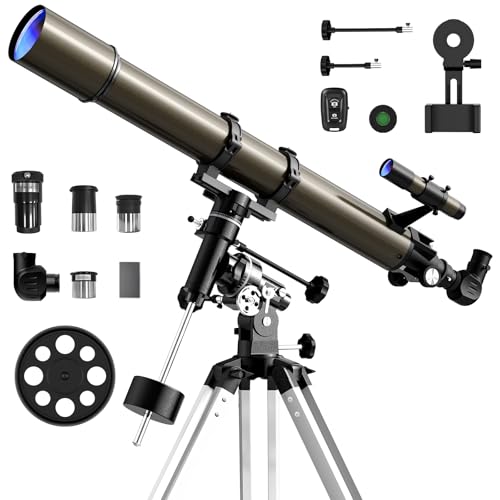
Best for: Moon and planet viewing beginners
This $269.99 NACATIN telescope is a 90mm refractor with a 1000mm focal length. That combination suits bright targets such as the Moon, Jupiter, and Saturn. The package includes 6mm, 10mm, and 20mm eyepieces, plus a 3x Barlow lens. The listed magnification range is 50x to 500x, although atmospheric conditions and optical quality can limit useful power at the top end.
The equatorial mount includes two slow-motion rods and a counterweight. After alignment, one control helps follow objects as Earth rotates, while the second makes fine positioning easier. An adjustable aluminum tripod, finderscope, star diagonal, and accessory tray come included. A smartphone adapter and wireless remote support basic Moon and planet photos. At this price, the kit offers a substantial starting package, but beginners should expect to spend time learning mount alignment and balancing before observing comfortably.
Pros
- A 90mm aperture gathers enough light for detailed lunar craters and bright planetary views.
- Two slow-motion controls allow finer tracking than a basic fixed tripod.
- The package includes three eyepieces, a Barlow lens, tripod, finderscope, and phone adapter.
Cons
- The advertised 500x magnification is unlikely to produce sharp views on most nights.
- The equatorial mount needs setup and alignment, which may frustrate casual users seeking quick viewing.
3. Celestron 114LCM Computerized Reflector Telescope

Best for: First-time backyard sky tours
The Celestron 114LCM is a computerized Newtonian reflector telescope made for new stargazers. Its 114mm aperture and all-glass optics collect enough light for views of the Moon, planets, and brighter deep-sky targets. The GoTo mount can locate up to 4,000 celestial objects after setup, so you do not need to identify every target manually.
The Sky Tour button suggests objects visible from your location, which helps when you are unsure where to start. The package includes a full-height tripod, a StarPointer red dot finderscope, and two eyepieces, 25mm and 9mm. It also includes a free Starry Night software download for planning sessions and simulating the sky from different locations. Celestron backs the telescope with a two-year US warranty and unlimited support from US-based staff.
Pros
- Computerized GoTo tracking helps locate thousands of celestial objects.
- The 25mm and 9mm eyepieces provide two useful viewing options.
- The Sky Tour feature recommends targets when you need guidance.
Cons
- The computerized mount requires setup before it can locate objects, so it is less immediate than a basic manual telescope.
- A 114mm aperture has limits on faint galaxies and nebulae, which may appear dim or lack detail.
2. Vertisteel Telescope

Best for: Family backyard moon viewing
This 90mm refractor telescope uses a 1000mm focal length to target the moon, planets, stars, and brighter deep-sky objects. Its listed magnification range runs from 50x to 100x, giving beginners several viewing options without needing a separate optical tube. The Vertisteel AZ mount supports up-and-down and side-to-side movement, so users can point the scope and follow objects as they shift across the sky.
Setup is aimed at first-time users, with an adjustable tripod that lets children and adults choose a comfortable viewing height. The tripod also provides the base needed for longer observation sessions, although the product details do not give its weight or folded size. A phone adapter comes in the package for basic photos and videos through the eyepiece. Smartphone imaging can take patience, since the phone camera must line up with the eyepiece and remain steady. At $199.99, this scope fits families who want a fuller astronomy setup than a simple toy, but buyers should keep expectations realistic. A 90mm aperture can show useful lunar and planetary detail, while faint galaxies may remain difficult in light-polluted areas.
Pros
- The 90mm aperture gathers more light than many entry-level toy scopes.
- A 1000mm focal length supports detailed moon and planetary viewing.
- The adjustable tripod and included phone adapter add practical family use.
Cons
- The manual AZ mount requires users to keep repositioning the scope as objects move.
- The product listing does not state the tripod’s packed size or total weight, making travel convenience hard to judge.
1. HETEKAN Telescope

Best for: Backyard astronomy and casual stargazing
The HETEKAN telescope pairs a 90mm aperture with a 1000mm focal length in a purple tube. Its larger opening gathers more light than 70mm and 80mm models, while fully multi-coated optics help reduce glare. The package includes 25mm, 10mm, and 6mm eyepieces, plus a 3X Barlow lens. Together, they cover claimed magnifications from 40x to 500x.
Two phone-mount options add useful flexibility. A standard adapter supports photos and videos, while the tube-mounted holder can help align a phone with the eyepiece. The stainless-steel alt-azimuth tripod adjusts from 28.74 to 46.45 inches. It moves 360 degrees horizontally and 180 degrees vertically for manual target tracking. A carrying bag and tool-free setup instructions make transport simpler. The listed price is $199.99, and the manufacturer says about 85% of users finish setup within 10 minutes.
Pros
- The 90mm aperture provides more light for brighter views of the Moon and larger celestial targets.
- Three eyepieces and a 3X Barlow lens offer several viewing options without buying extra glass immediately.
- The adjustable stainless-steel tripod works for seated or standing viewing and packs for outdoor trips.
Cons
- Magnification up to 500x can exceed practical viewing conditions, especially with atmospheric distortion or a moving target.
- The alt-azimuth mount requires manual adjustments, so it does not automatically follow stars or planets.
Buying Guide
Prioritize aperture, the diameter of the telescope’s main lens or mirror. A 6- to 8-inch aperture gathers far more light than a 3-inch model, revealing fainter galaxies, nebulae, and sharper planetary detail.
- Aperture: Choose at least 6 inches for serious visual observing. An 8-inch Dobsonian often offers the strongest deep-sky performance below $1,000.
- Mount stability: Select a mount that supports the optical tube without shaking. After focusing, the image should settle within two seconds. A solid Dobsonian base often beats a lightweight tripod.
- Optical design: Reflectors provide more aperture per dollar but need occasional mirror alignment. Refractors require less maintenance, though a quality 4-inch model can cost more than a 6-inch reflector.
- Portability: Check the packed dimensions and weight before buying. A 6- to 8-inch Dobsonian may weigh 35 to 55 pounds, with a tube around 45 to 50 inches long.
- Included equipment: Look for two eyepieces, such as 25mm and 10mm, plus a red-dot finder. Budget $50 to $150 later for better eyepieces or a collimation tool.
If you cannot have everything, prioritize aperture, but only with a mount sturdy enough to keep views steady.
Frequently Asked Questions
How do I choose a telescope for under $1,000?
A good choice depends on your targets, portability needs, and tolerance for setup. For general viewing, choose a 6- to 8-inch Dobsonian reflector with a stable base and two eyepieces. A 6-inch tube usually offers strong views of the Moon, planets, star clusters, and brighter nebulae without requiring a motor.
What can I see with a telescope in this price range?
A telescope costing less than $1,000 can show lunar craters, Saturn’s rings, Jupiter’s cloud bands, and many deep-sky objects from a dark location. A 6-inch reflector can reveal dozens of star clusters and brighter nebulae, though galaxies often appear as faint gray smudges rather than colorful photographs.
Are computerized telescopes worth the money?
Computerized telescopes are worth the money if you value automatic object locating and simpler navigation. They cost more than comparable manual models, leaving less budget for aperture. A $700 to $1,000 system may provide tracking, but a manual 8-inch Dobsonian can collect more light for visual observing.
Can a beginner use a telescope under $1,000?
A beginner can use a telescope under $1,000, especially a simple Dobsonian with a tabletop or floor-standing mount. Avoid models with flimsy tripods and complicated controls. An 8-inch Dobsonian may weigh about 40 to 50 pounds total, so check storage space and plan to move it in two pieces.
Conclusion
HETEKAN Telescope is the top recommendation for shoppers who want a capable, approachable setup for viewing the Moon, planets, and brighter deep-sky objects without spending four figures. If your priority is easy transport rather than a fuller viewing setup, choose the most compact tabletop model in the roundup, since its smaller size is simpler to store and carry. Before buying, double-check the telescope’s overall size, tripod or mount compatibility, included accessories, and quantity of each item, then compare the current price across several retailers because promotions can change the value quickly. Also confirm that the package includes the accessories you need, such as eyepieces or a phone adapter, instead of assuming every listing contains the same extras.
